 India
India

RELATED POSTS
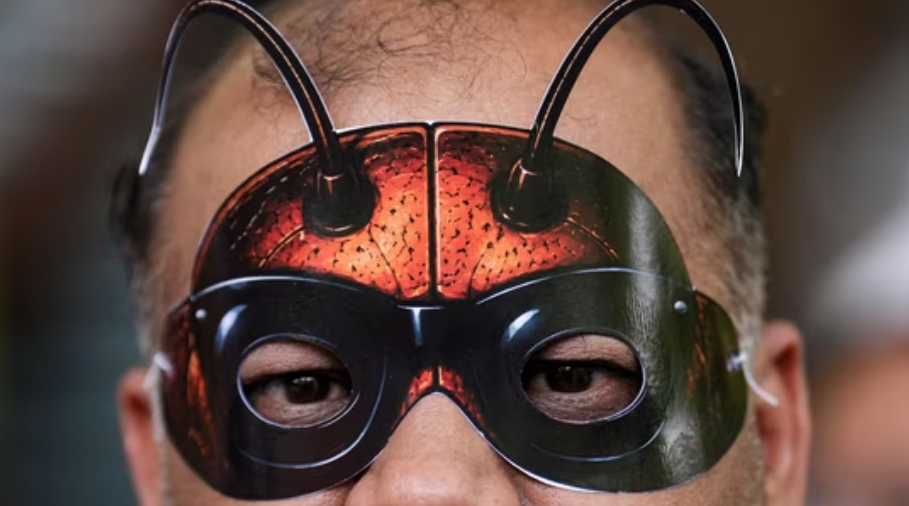
The Cockroach Janta Party (CJP), a newly emerging protest group that has gained traction online over issues related to education, held its first major on-ground demonstration at Jantar Mantar on Saturday, drawing a few hundred supporters to demand action over alleged irregularities in NEET 2026, concerns around CBSE’s on-screen marking system, and calling for the resignation of Union Education Minister Dharmendra Pradhan.
Founded and led by Abhijeet Dipke, who travelled from the United States to lead the protest, the movement attempted to translate its strong digital presence into physical mobilisation. However, the event highlighted multiple organisational shortcomings, ranging from repeated timing changes to inadequate on-ground coordination.
Frequent changes in schedule and gathering points create confusion
In the days leading up to the protest, organisers repeatedly revised instructions for supporters. Initially, Dipke had urged followers to gather at the airport upon his arrival in Delhi. This plan was later scrapped, with participants instead directed to assemble near the Parliament Street Police Station.
On the morning of the protest, another update redirected supporters directly to Jantar Mantar. These frequent changes left many participants uncertain about where to assemble, with some travelling overnight from different parts of the country.
Weak sound system disrupts speeches amid police announcements
Once the gathering began, CJP leaders attempted to address the crowd using a handheld microphone and a quickly assembled stage. However, the sound system proved inadequate for the size of the gathering. Speeches were frequently drowned out by background noise and public announcements made by Delhi Police using loudspeakers.
At several points, Dipke’s remarks were barely audible to those beyond the immediate vicinity of the stage. Frustrated by interruptions, he was heard asking, “Ye kaun bol raha hai?”
Lack of volunteers affects crowd coordination
The protest also suffered from insufficient volunteer deployment. Without structured coordination, the crowd often split into smaller groups, chanting slogans independently rather than maintaining unified momentum. Organisers struggled to manage movement, particularly when media personnel surrounded key speakers.
At one stage, Dipke was briefly stuck amid a cluster of reporters while other participants moved ahead, reflecting the absence of a clearly defined crowd-control system.
Last-minute permissions and administrative uncertainty
According to reports, permission for the protest was sought on the day of the event, creating uncertainty for both organisers and law enforcement authorities. Typically, prior approval is required well in advance for large public demonstrations in central Delhi.
Police sources cited by PTI indicated limited prior information about the scale or structure of the mobilisation. In response, authorities deployed approximately 1,000 personnel across the area to maintain order.
Heat, hydration issues add to participant discomfort
The protest took place under harsh summer conditions, with temperatures nearing 40°C. Many participants reported difficulty accessing drinking water. Nearby vendors quickly ran out of bottled water, while some resorted to selling alternatives such as lassi at inflated prices due to demand.
Although water tankers and small bottled supplies arrived later, the availability remained insufficient for the crowd size, leaving many attendees dehydrated and fatigued.


 English
 Gujarati
 Hindi
Hindi Kannada
 Malayalam
 Marathi
 Punjabi
 Tamil
Tamil Telugu