


 India


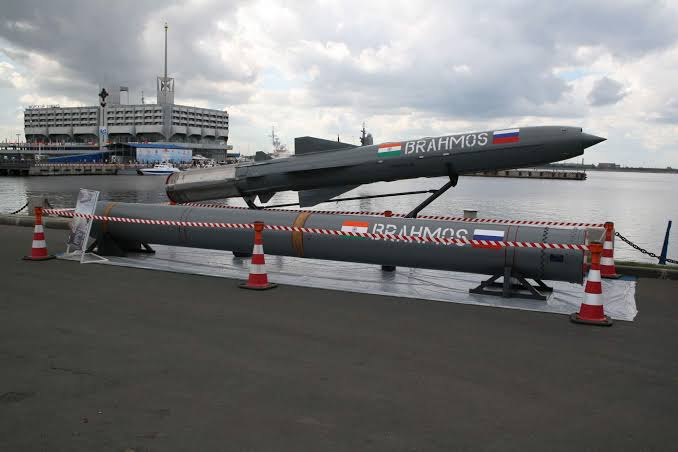
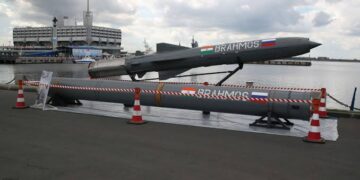
India’s defence exports are gaining momentum in Southeast Asia, with the Philippines receiving supplies of the BrahMos supersonic cruise missile and Vietnam signing an agreement with BrahMos Aerospace. Several other countries in the region have also expressed interest in acquiring the missile, signalling growing international demand for India’s indigenous defence technology.
BrahMos Aerospace Chairman and Managing Director Jaiteerth R Joshi confirmed the developments on Friday, November 13, stating that discussions with multiple interested countries had reached an advanced stage. He indicated that additional export agreements could be finalised once the Indian government grants the necessary clearances.
“Once the government clears it, we will have a deal with them,” Joshi told reporters in Hyderabad while responding to questions about countries that had finalised agreements and those currently engaged in negotiations.
The growing interest in the BrahMos missile comes against the backdrop of its reported operational performance during Operation Sindoor, which has brought renewed attention to India’s precision-strike capabilities and defence manufacturing ecosystem.
Joshi also highlighted the importance of non-destructive testing (NDT) in ensuring the reliability and operational readiness of the missile systems. He explained that the missiles used during the operation had been manufactured several years earlier, with some dating back 10, 15 or even 20 years. Despite their age, rigorous testing procedures helped ensure that they remained reliable and performed as intended.
“NDT plays a vital role for any product. Operation Sindoor was never anticipated. The missiles were made 10, 15, 20 years back. NDT has ensured their reliability. The moment we took the item and fired, it went and delivered,” Joshi said.
His remarks underline the significance of quality assurance, periodic inspection and advanced testing technologies in the defence sector, particularly for sophisticated weapon systems that may remain in service for decades.

The BrahMos missile, jointly developed by India and Russia, has emerged as one of India’s prominent defence export offerings. Its export agreement with the Philippines marked a significant step in India’s efforts to expand its defence partnerships in Southeast Asia. The latest agreement with Vietnam and interest from other regional countries could further strengthen India’s position in the international defence market.
The developments also come at a time when several Southeast Asian nations are looking to strengthen their military capabilities amid evolving regional security challenges. Increased interest in the BrahMos system could create new opportunities for India’s defence industry and deepen strategic cooperation with countries across the Indo-Pacific.
Joshi made the statements while briefing reporters about two major technical events scheduled to take place in Hyderabad from November 15 to 17.
These include the 36th Annual Conference on Non-Destructive Evaluation and Enabling Technologies (NDE 2026) and AeroNDT 2026, the 15th International Symposium on Non-Destructive Testing in Aerospace. Both events are being organised by the Indian Society for Non-Destructive Testing.
Defence Minister Rajnath Singh will attend the inaugural ceremony on November 15 as the chief guest.
According to Joshi, NDE 2026 is expected to attract more than 2,000 professionals, researchers, academics and industry representatives. The conference will feature over 100 international speakers, while more than 100 exhibitors from India and abroad are expected to showcase advanced testing equipment, technologies and industrial solutions.
The event is also expected to generate substantial commercial opportunities, with business deals worth more than ₹3,000 crore, technology exchanges and memorandums of understanding (MoUs) anticipated during the proceedings.
Joshi further highlighted the importance of encouraging young engineers and students to engage with emerging technologies. Special arrangements have been made to provide engineering students with hands-on exposure to state-of-the-art equipment, allowing them to understand the practical applications of non-destructive testing across aerospace, defence and other industrial sectors.
The growing international demand for BrahMos, alongside India’s expanding defence manufacturing capabilities, reflects the country’s broader ambition to strengthen its position as a major defence exporter.



 English
 Gujarati
 Hindi
 Kannada
 Malayalam
 Marathi
 Punjabi
 Tamil
 Telugu