



 India


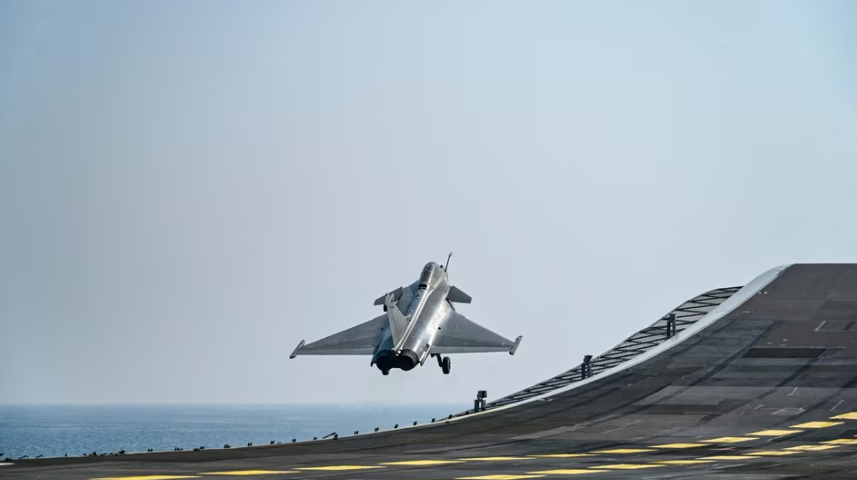
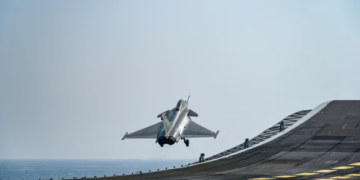
India has achieved a significant milestone in strengthening its naval aviation capabilities, with the Rafale Marine fighter jet carrying out its maiden landing and take-off aboard the country’s indigenous aircraft carrier, INS Vikrant. The successful trials, conducted on Thursday, October 29, mark a major step towards integrating the French-origin fighter aircraft into the Indian Navy’s carrier operations.
According to officials familiar with the development, the trials represent the initial phase of operationalising the Rafale Marine fighters ahead of their formal induction into the Navy. The aircraft’s ability to land on and take off from INS Vikrant is particularly significant as India moves towards expanding its carrier-based combat capabilities.
French pilots had previously conducted similar trials at a shore-based testing facility in Goa. However, the latest exercise marks the first time the Rafale Marine has demonstrated its carrier operations aboard India’s own aircraft carrier.
India signed a ₹63,000-crore agreement with France in April 2025 to procure 26 Rafale Marine fighter jets for the Navy. The aircraft, manufactured by French aerospace major Dassault Aviation, will operate from India’s two aircraft carriers, INS Vikrant and INS Vikramaditya.
Deliveries under the agreement are scheduled to begin in 2029, with the entire fleet expected to be handed over by 2031.
INS Vikrant: A major boost to India’s indigenous naval power
Commissioned by Prime Minister Narendra Modi in September 2022, INS Vikrant is India’s first indigenously designed and constructed aircraft carrier. Built over 13 years at an estimated cost of ₹20,000 crore, the warship represents a major achievement in India’s domestic defence manufacturing capabilities.
Weighing approximately 45,000 tonnes, INS Vikrant has an indigenous content of 76 per cent. The 262-metre-long carrier features 15 decks and 2,300 compartments, with the capacity to accommodate around 30 aircraft and a crew of approximately 1,600 personnel. It has an operational endurance of 7,500 nautical miles.

Currently, INS Vikrant operates Russian-origin MiG-29K fighter jets. These aircraft use a ski-jump arrangement for take-off and arrestor wires for landing, a configuration known as STOBAR (Short Take-Off But Arrested Recovery).
The introduction of Rafale Marine fighters will further strengthen the carrier’s combat capabilities and diversify the Navy’s fighter fleet.
INS Vikrant is the fourth aircraft carrier operated by the Indian Navy. It follows the original INS Vikrant, which served from 1961 to 1997, INS Viraat, which remained in service from 1987 to 2016, and INS Vikramaditya, which has been operational since 2013.
India’s growing Rafale fleet and the proposed ₹3.25-lakh-crore deal
The latest naval development comes as India considers a massive expansion of its Rafale fighter fleet for the Indian Air Force.
The IAF currently operates 36 Rafale fighter jets, procured from France under a ₹59,000-crore agreement. Some of these aircraft were also deployed during Operation Sindoor in May 2025.
India is now working towards a proposed acquisition of another 114 Rafale fighter jets under the Multi-Role Fighter Aircraft (MRFA) programme. The estimated value of the proposed agreement stands at approximately ₹3.25 lakh crore, making it one of India’s largest prospective defence procurement deals.
The contract could be finalised by the end of the 2026-27 financial year. Under the proposed government-to-government arrangement, 18 aircraft are expected to be delivered directly from France in fly-away condition, while the remaining fighters will be manufactured in India in partnership with a domestic company.
The proposed manufacturing arrangement envisages producing 12 Rafale aircraft annually in India.
Discussions between New Delhi and Paris have also covered the localisation of production, integration of indigenous weapons systems and other India-specific requirements.
The proposed acquisition is particularly important for the Indian Air Force, which is facing a shortage of fighter squadrons. On October 3, Air Chief Marshal AP Singh highlighted the need for timely induction of additional fighter aircraft, including Rafales, LCA Mk-1A jets and additional Sukhoi-30MKIs.
The IAF currently has around 30 operational fighter squadrons against its sanctioned strength of 42.5.
With the maiden Rafale Marine trials aboard INS Vikrant, India is taking another step towards strengthening its maritime strike capabilities while advancing its broader strategy of modernising its armed forces and expanding indigenous defence manufacturing.




 English
 Gujarati
 Hindi
 Kannada
 Malayalam
 Marathi
 Punjabi
 Tamil
 Telugu