



 India
India

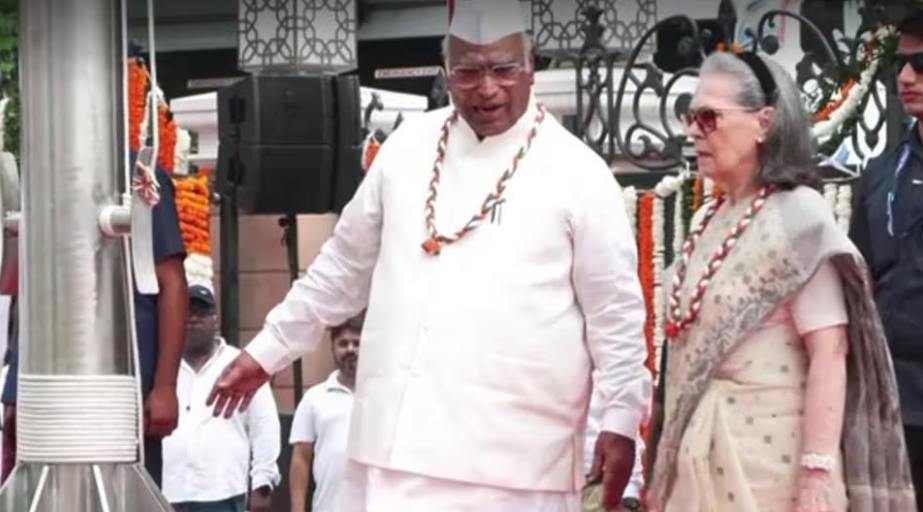
A complaint has been filed against senior Congress leaders Sonia Gandhi and Rahul Gandhi over alleged disrespect to the National Song, Vande Mataram, during an Independence Day event at the Congress headquarters in New Delhi.
The complaint, filed on Sunday by lawyers Kunal Vinayak and Shubh Sharma, centres on video footage from the August 15 flag-hoisting ceremony at the party headquarters. The complainants have alleged that Sonia Gandhi appeared to object to the continuation of the rendition of Vande Mataram, while Rahul Gandhi was allegedly heard saying, “We are not singing Vande Mataram.”
According to the complaint, video footage circulating in the public domain purportedly shows that after the initial portion of the National Song had been sung, Sonia Gandhi made gestures and communicated with people present at the venue. The complainants said her actions “prima facie” appeared to indicate an objection to the continuation of the rendition.
The complaint further referred to media reports alleging that Sonia Gandhi had objected to the complete rendition of Vande Mataram. The lawyers argued that the exact nature and intention behind the gestures should be examined by the competent authorities.
The complaint also cited separate footage in which Rahul Gandhi allegedly appears to say, “We are not singing Vande Mataram.” The complainants said the alleged statement, when viewed alongside the ongoing rendition of the National Song and Sonia Gandhi’s reported conduct, raises questions about the intention behind the actions of both leaders.
The controversy comes amid heightened political debate over the treatment of Vande Mataram. Union Home Minister Amit Shah, addressing a rally in Chittorgarh earlier on Sunday, accused the Congress of forgetting the National Song because of “greed for vote banks”. Shah also demanded that the Congress apologise to the people over the alleged incident.
BJP leader Amit Malviya has separately criticised Sonia Gandhi, alleging that she appeared uncomfortable with the complete rendition of Vande Mataram at the Independence Day event. The Congress, however, has rejected the allegations and maintained that Sonia Gandhi’s actions had nothing to do with the National Song being played at the venue.

The legal complaint has also referred to the Prevention of Insults to National Honour (Amendment) Bill, 2026, which seeks to extend penal protection currently available to the National Anthem to the National Song.
Under the amended provision cited in the complaint, a person who intentionally prevents the singing of the National Anthem or National Song, or causes disturbance to an assembly engaged in singing either, could face imprisonment of up to three years, a fine, or both.
The allegations against Sonia and Rahul Gandhi are yet to be established by any competent authority. The complaint seeks an investigation into the events and the conduct captured in the video footage.
The dispute has now added another political flashpoint between the BJP and Congress, with Vande Mataram becoming the centre of a fresh confrontation over national symbols, political conduct and the treatment of the National Song.



 English
 Gujarati
 Hindi
Hindi Kannada
 Malayalam
 Marathi
 Punjabi
 Tamil
Tamil Telugu