

 India
India

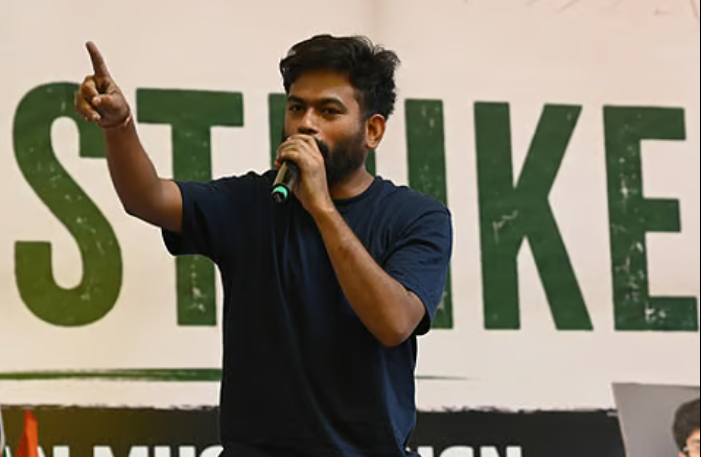
The newly formed Cockroach Janta Party (CJP), led by activist Abhijeet Dipke, has positioned itself as a “pressure group” rather than a political party, reigniting discussions about the role such organisations play in India’s democracy. Speaking in Chhatrapati Sambhajinagar, Dipke said the country currently needs a pressure group more than another electoral force and confirmed that CJP members would support job aspirants protesting alleged irregularities in Jharkhand Public Service Commission recruitment examinations.
In political science, a pressure group is an organisation that seeks to influence government policies and public decisions without contesting elections or directly trying to form a government. Unlike political parties, whose primary goal is to win power, pressure groups focus on shaping legislation, public opinion, and administrative decisions from outside the formal political system.
Pressure groups come in many forms. Some represent specific interests, such as trade unions, farmer associations, and business chambers like the Federation of Indian Chambers of Commerce and Industry (FICCI), the Confederation of Indian Industry (CII), and the Associated Chambers of Commerce and Industry of India (ASSOCHAM). Others champion broader causes such as environmental protection, anti-corruption campaigns, transparency, education reform, or social justice. CJP falls into this second category, often described as a “promotional” pressure group because it promotes a cause rather than representing a defined membership base.
Political scientists classify pressure groups in several ways. One common distinction is between “sectional” groups, which represent a particular constituency, and “promotional” groups, which campaign for wider public causes. Another framework, developed by Gabriel Almond and G. Bingham Powell, categorises groups as anomic, non-associational, institutional, or associational depending on how organised they are. CJP’s recent protests and organisational efforts suggest it is moving toward becoming a formal associational group.
A third classification, developed by British political scientist Wyn Grant, separates pressure groups into “insiders” and “outsiders.” Insider groups maintain regular access to policymakers and government consultations, while outsider groups rely on public protests, media campaigns, court interventions, and street mobilisation. CJP currently fits squarely within the outsider category.
Historically, India has witnessed both types. The Chipko movement, known for villagers hugging trees to prevent deforestation in the 1970s, remained a pressure movement throughout its existence. The Narmada Bachao Andolan used litigation, protests, and advocacy to challenge large dam projects while never becoming a political party. By contrast, movements such as Jayaprakash Narayan’s anti-Emergency campaign and Anna Hazare’s India Against Corruption movement eventually gave rise to political parties that entered electoral politics.
Pressure groups use various methods to influence decision-making. These include lobbying, public campaigns, court cases, media outreach, mass protests, hunger strikes, and voter awareness initiatives. CJP’s recent demonstrations at Jantar Mantar, supported by environmentalist and education activist Sonam Wangchuk, exemplify the use of public mobilisation as a pressure tactic.
Funding remains a crucial issue for all pressure groups. While trade unions and industry associations often rely on membership fees, cause-based organisations depend on donations, grants, crowdfunding, and public contributions. Questions surrounding funding transparency frequently become central to debates about their credibility and influence.
Political theorists remain divided on the value of pressure groups. Some view them as essential democratic instruments that allow citizens to influence policy between elections. Others argue that well-funded organisations can gain disproportionate influence, leaving less organised groups with a weaker voice.
For now, Dipke’s CJP appears firmly positioned as a promotional, outsider pressure group focused on institutional accountability and public-interest campaigns. Whether it remains a movement outside electoral politics or eventually follows the path of other activist organisations into party politics will likely determine its long-term place in India’s political landscape.



 English
 Gujarati
 Hindi
Hindi Kannada
 Malayalam
 Marathi
 Punjabi
 Tamil
Tamil Telugu