


 India
India

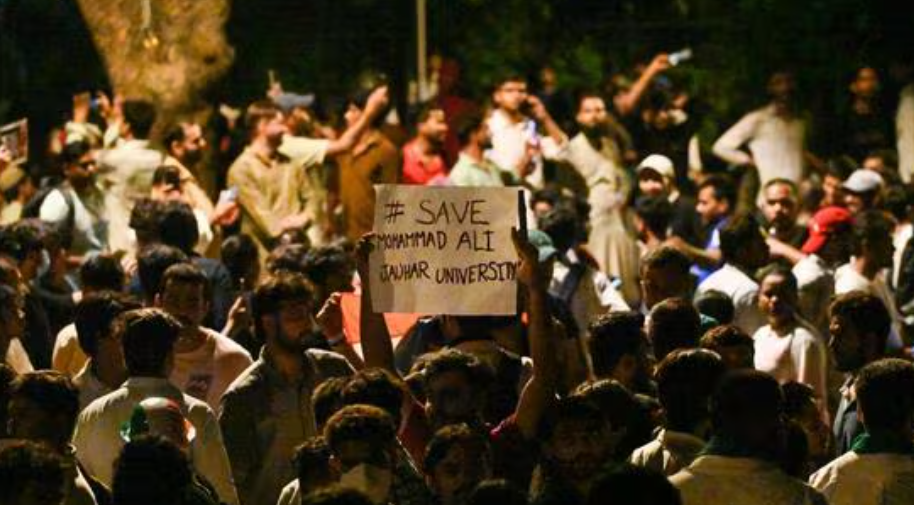
The protest at Jantar Mantar showed no signs of slowing down on Friday, with thousands of people gathering in support of the Cockroach Janta Party (CJP) even after activist Sonam Wangchuk ended his 26-day indefinite hunger strike. Demonstrators maintained a determined stance, insisting that the agitation would continue until their demands were addressed by the central government.
The atmosphere at the protest venue remained charged throughout the day, with long queues stretching from Jantar Mantar Road towards the Janpath Metro Station on Tolstoy Marg. Many visitors reportedly had to wait between 50 minutes and nearly two hours before entering the main protest site as crowds continued to swell.
Supporters from across the country, including lawyers, farmer unions, NGO representatives, students, and social activists, arrived carrying banners and placards to express solidarity with the movement. Delegations from neighbouring states also joined the gathering, highlighting the growing reach of the protest.
Among those attending was Pankaj Singh from Delhi’s Rohini area, who said he felt compelled to participate after witnessing videos of the protests circulating on social media. According to him, the movement had become a significant public moment that many citizens did not want to miss. He also criticized the government’s handling of protests, drawing comparisons with previous demonstrations involving wrestlers.
The protest site echoed with patriotic songs, slogans, and speeches as participants expressed their determination to keep the campaign alive. From the main stage, CJP leaders thanked supporters for standing with the movement and reiterated that Sonam Wangchuk’s decision to end his fast would not mark the conclusion of the agitation.
CJP founder Abhijeet Dipke told the gathering that Wangchuk’s hunger strike had inspired people across the country and transformed the campaign into a broader youth movement. He stressed that the protest was no longer centered on a single individual or organization but had evolved into a nationwide demand for accountability. Dipke once again called for the resignation of Union Education Minister Dharmendra Pradhan.
Dipke also took aim at reports suggesting that Union ministers had been encouraged to increase their engagement on social media platforms such as Instagram, where the protest movement has gained significant visibility. He argued that online popularity could not replace meaningful responses to the concerns raised by demonstrators.
Many protesters echoed the leadership’s message. Satish Deshpande, who travelled from Madhya Pradesh to join the demonstration, said it was essential to maintain the momentum. According to him, allowing the movement to weaken could result in it being suppressed before meaningful change is achieved.
One of the notable features at the protest site was a “Wall of Shame,” displaying photographs allegedly showing police personnel using force against demonstrators during the July 20 “Chalo Sansad” march organized by the CJP. Protest organizers have demanded that FIRs be registered against officers accused of violence or sexual harassment during the demonstration. They have also appealed to citizens to upload photographs and videos through the organization’s website to help identify security personnel involved in the incidents.
Despite the strong rhetoric from the stage, organizers repeatedly urged protesters to remain peaceful and avoid confrontation with police. Volunteers stationed near the Sansad Marg barricades used loudspeakers to remind participants that talks with the central government were continuing and that any violence could jeopardize the negotiations.
Meanwhile, a second round of discussions between CJP representatives and the Centre took place on Friday. Although no major breakthrough was announced, the absence of any significant clashes between protesters and security personnel throughout the evening suggested that both sides were attempting to keep the dialogue process alive.
With large crowds continuing to arrive and organizers promising to sustain the campaign, Jantar Mantar remains the focal point of a movement that participants say will continue until their key demands are fulfilled.




 English
 Gujarati
 Hindi
Hindi Kannada
 Malayalam
 Marathi
 Punjabi
 Tamil
Tamil Telugu