





 India
India

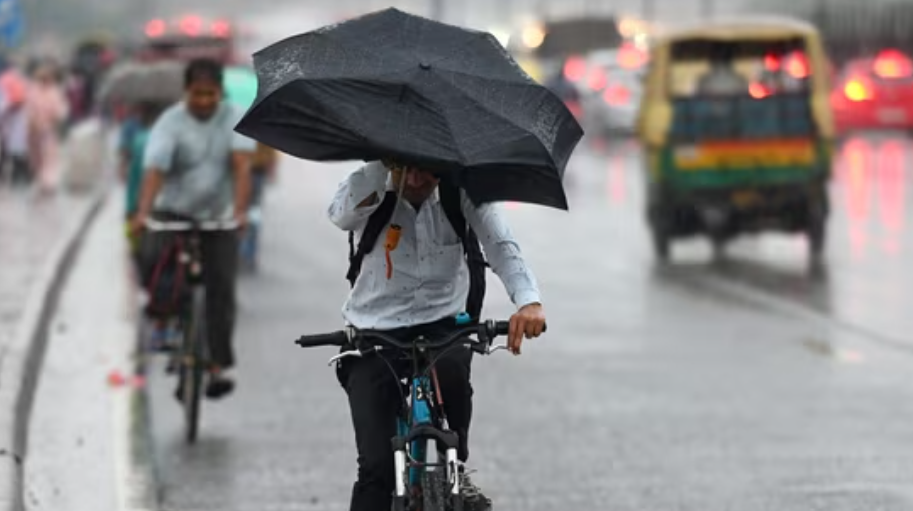
Delhi may finally get relief from scorching summer conditions as weather experts predict the arrival of the southwest monsoon around July 3 or 4. The national capital has been experiencing oppressive heat and humidity, with the apparent or “feels-like” temperature soaring to an alarming 53.5 degrees Celsius on Tuesday evening.
According to meteorologists, a cyclonic circulation over the north Bay of Bengal is likely to intensify into a low-pressure area in the coming days. The system is expected to move westward, increasing rainfall activity across the Indo-Gangetic plains and creating favorable conditions for the monsoon’s advance into Delhi and neighboring regions.
Weather experts noted that the seasonal monsoon trough currently stretches from Punjab to the north Bay of Bengal. The monsoon has already progressed over large parts of Uttar Pradesh, Uttarakhand, Himachal Pradesh, Ladakh, and sections of Madhya Pradesh. As the low-pressure system develops, rainfall is forecast to become more widespread across Bihar, Uttar Pradesh, Haryana, Punjab, Delhi, and parts of Rajasthan.
A key factor delaying the monsoon’s arrival in Delhi has been the absence of humid easterly winds from the Bay of Bengal. These moisture-laden winds are crucial for sustaining monsoon rainfall. Experts expect these winds to reach Delhi around July 3 or 4, coinciding with the movement of the seasonal trough. Until then, only isolated rain showers are likely across the city.
The monsoon trough plays a critical role in organizing rainfall across India. Acting as an elongated zone of low pressure, it draws moisture from both the Arabian Sea and the Bay of Bengal, helping generate widespread rain activity over northern and central parts of the country.
Meanwhile, Delhi continues to endure uncomfortable weather conditions. The maximum temperature at Safdarjung, the city’s primary weather station, reached 40.5 degrees Celsius, which was more than three degrees above normal. Other stations across the capital also recorded temperatures above 40 degrees Celsius, with Ridge emerging as the hottest location at 41.5 degrees Celsius.
Despite the intense heat, the India Meteorological Department (IMD) did not declare a heatwave over Delhi. Officials explained that heatwave conditions must be recorded at a minimum of two stations within the Haryana-Chandigarh-Delhi subdivision, while only one station met the required criteria.

Meteorologists attributed the persistent heat to the interaction between dry westerly winds originating from Pakistan and moisture-bearing southwesterly winds arriving from the Arabian Sea. While this interaction has led to cloud formation, moisture levels have remained insufficient for widespread rainfall. As a result, temperatures have continued to rise throughout the day before clouds can provide any meaningful cooling effect.
With the expected arrival of easterly winds and strengthening weather systems over the Bay of Bengal, Delhi is likely to witness a significant increase in rainfall activity by the end of the week, marking the long-awaited onset of the southwest monsoon and bringing much-needed relief from the prolonged spell of heat and humidity.





 English
 Gujarati
 Hindi
Hindi Kannada
 Malayalam
 Marathi
 Punjabi
 Tamil
Tamil Telugu