

 India
India

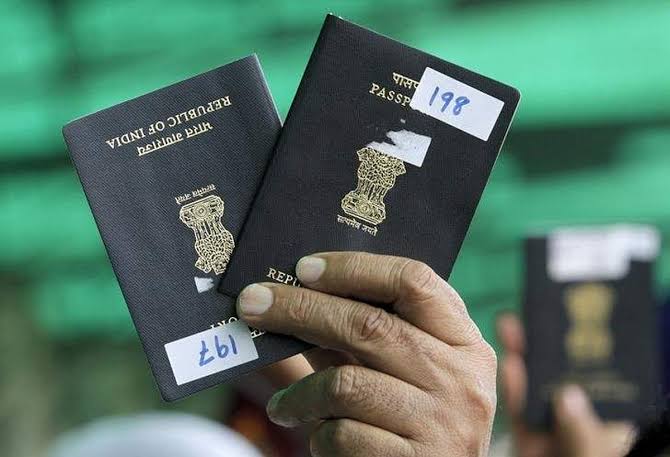
The Ministry of External Affairs (MEA) has clarified that a passport should primarily be viewed as a travel document and not as a standalone proof of citizenship. The clarification came during events marking Passport Seva Divas, observed annually on June 24 to commemorate the enactment of the Passports Act, 1967.
According to MEA officials, a passport serves as an official document that confirms the nationality of an Indian citizen while travelling abroad. Although the issuance of a passport involves extensive verification and scrutiny by multiple government agencies, it is not legally classified as a definitive document of citizenship. Officials emphasized that passport issuance is based on a detailed due diligence process involving several supporting documents and background checks.
The ministry also highlighted the growing success of India’s chip-based e-passport programme, which was introduced as part of the modernization of the Passport Seva Programme. Since the launch of e-passports last year, approximately 14.7 million such documents have been issued across the country. At present, all newly issued passports are equipped with advanced electronic technology.
The e-passports contain an embedded Radio Frequency Identification (RFID) chip and antenna that securely store personal details and biometric information of the passport holder. These advanced security features significantly reduce the risk of tampering, identity fraud, and the creation of counterfeit passports. Officials noted that the enhanced security standards also increase trust among international immigration authorities, helping Indian travellers experience smoother and faster clearance processes at foreign airports.
To ensure reliability and security, the technology used in India’s e-passports has been developed after studying international best practices. The chips are sourced through the India Security Press in Nashik, while continuous efforts are underway to further strengthen document security. The ministry also clarified that although Tata Consultancy Services serves as the technology partner for the Passport Seva Project, all passport-related data remains securely stored on government-controlled servers managed by the MEA.
Beyond passport modernization, the government is also focusing on expanding legal migration opportunities for Indian workers. As part of this effort, the MEA will organize a Human Resource Mobility Forum on June 30 and July 1. The event aims to connect Indian job seekers with ethical international employers while creating awareness about safe and legal migration channels.
Countries such as Denmark, Germany, Italy, Japan, and Russia will be among the key participants. The forum is expected to address concerns related to worker exploitation and fraudulent overseas recruitment, including cases where Indians have been misled into dangerous situations abroad. Officials stressed the importance of proper training, awareness, and transparent recruitment mechanisms to protect aspiring migrant workers.

The ministry also reported significant progress in enhancing global travel opportunities for Indian citizens. The number of countries offering visa-free access to Indian passport holders has increased from 16 in 2019 to 27 today. Similarly, visa-on-arrival facilities are now available in 47 countries, compared to 38 seven years ago. Additionally, 66 countries currently offer e-visa facilities to Indian travellers.
India has also signed migration and mobility agreements with 25 countries, particularly in Europe, helping create legal pathways for employment and education while facilitating the return of illegal migrants when necessary.
On the domestic front, passport services have become considerably more efficient. The average passport processing time has been reduced to just five to six days, while efforts have been made to ensure applicants spend less than 45 minutes at Passport Seva Kendras. The nationwide network of Passport Seva Kendras and Post Office Passport Seva Kendras has expanded dramatically, growing from 77 centres a decade ago to 544 today.
Officials are now focusing on reducing police verification timelines even further, drawing lessons from states that have successfully completed the process within two to three days. These reforms are expected to make passport issuance faster, more secure, and more accessible for millions of Indians in the years ahead.


 English
 Gujarati
 Hindi
Hindi Kannada
 Malayalam
 Marathi
 Punjabi
 Tamil
Tamil Telugu