



 India
India

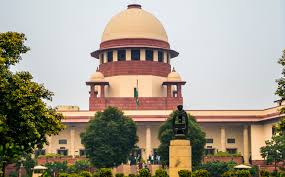
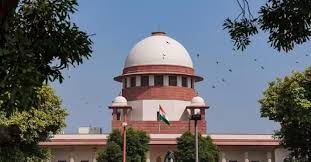
The Supreme Court on Tuesday refused to grant bail to a man accused of being associated with the proscribed terrorist organisation Islamic State of Iraq and Syria (ISIS). The court noted that the accused was allegedly involved in attempts to create a “ring of terror” across the country.
The decision came just a day after a blast near Delhi’s historic Red Fort claimed the lives of at least 12 people, triggering heightened security across the capital. During the hearing, the petitioner’s counsel remarked that it might “not be the best morning” to argue the case in light of the previous day’s tragic incident.
Responding to this, the bench of Justices Vikram Nath and Sandeep Mehta observed, “It is the best morning to send a message,” underlining the judiciary’s zero-tolerance stance toward terrorism. The remark reflected the court’s resolve to deliver a strong deterrent message against those allegedly attempting to destabilize the nation.
The case involves Syed Mamoor Ali, who had approached the Supreme Court challenging a January order by the Madhya Pradesh High Court denying him bail. Ali faces charges under multiple sections of the Unlawful Activities (Prevention) Act (UAPA) and the Indian Penal Code (IPC), which are among the most stringent provisions dealing with national security and terrorism.
The prosecution has accused Ali of being part of a wider network seeking to recruit and radicalize individuals for ISIS activities within India. His alleged involvement in propagating extremist ideology and supporting terror-related operations has been under investigation by national security agencies.
The Madhya Pradesh High Court had earlier rejected his bail plea, citing the serious nature of the allegations and the potential threat to public safety. The Supreme Court, concurring with the high court’s findings, observed that granting bail in such a case could send a wrong signal, especially in the wake of recent terror-related incidents.
Tuesday’s decision comes amid renewed focus on counterterrorism measures following the Red Fort blast, which has prompted calls for tighter surveillance and stronger enforcement under the UAPA. Legal experts say the top court’s observation serves as both a symbolic and practical reinforcement of India’s stand against terrorism.

With the investigation into the Red Fort explosion still underway, the court’s strong words have added a judicial dimension to the national outrage over rising terror threats. The ruling underscores the judiciary’s role in upholding national security and ensuring that the fight against terrorism remains uncompromising.




 English
 Gujarati
 Hindi
Hindi Kannada
 Malayalam
 Marathi
 Punjabi
 Tamil
Tamil Telugu