




 India
India

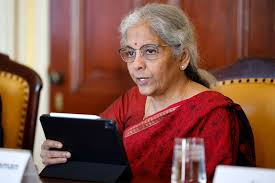
Finance Minister Nirmala Sitharaman is set to make history on Sunday, February 1, when she presents the Union Budget for 2026–27 in what government sources describe as one of the most unconventional budget speeches in independent India’s 75-year journey. The Budget presentation, to be delivered on a Sunday for the first time, is expected to significantly deviate from established norms by placing unprecedented emphasis on Part B of the Budget speech.
According to sources familiar with the planning, Sitharaman’s speech will look markedly different from previous years, where the bulk of attention traditionally remained on Part A — the section that outlines new schemes, sector-wise initiatives and headline policy announcements. This time, however, the second part of the speech is expected to take centre stage, reflecting a broader and more strategic economic narrative.
The Union Budget 2026 will be Sitharaman’s ninth consecutive Budget, a record in itself, and expectations are high amid calls for structural reforms, fiscal discipline and targeted government spending. Yet, officials suggest the finance minister’s approach this year will go beyond immediate policy measures and focus more deeply on India’s long-term economic goals.
Sources indicated that Part B of the Budget speech will be substantially expanded, with Sitharaman likely to speak at length on both short-term priorities and long-term national objectives. The emphasis is expected to reflect India’s evolving economic vision as the country moves further into the second quarter of the 21st century, positioning itself as a major global economic force.
Government officials said the expanded Part B will also outline a roadmap for showcasing India’s local strengths on the global stage. This includes highlighting domestic capabilities, manufacturing potential, innovation ecosystems and India’s readiness to play a larger role in global value chains, while also laying out aspirations for future growth.
Economists and policy experts in India and abroad are expected to closely track this shift in focus, as the second part of the Budget could offer crucial insights into the government’s long-term policy direction and economic thinking. Traditionally, Part B contained only brief remarks or limited fiscal details, making this year’s approach a rare departure from convention.
The Budget for the April 2026 to March 2027 fiscal year comes at a time of heightened global uncertainty. While India’s domestic demand has remained resilient and recent GDP growth touched a six-quarter high of 8.2%, the global environment remains challenging. Geopolitical tensions, volatile commodity prices and uneven monetary easing by major central banks continue to pose risks to economic stability.
Against this backdrop, Sitharaman’s Budget speech is expected to balance optimism about India’s growth prospects with caution over global headwinds, using the expanded Part B to articulate a long-term economic roadmap rather than focusing solely on short-term announcements.


 English
 Gujarati
 Hindi
Hindi Kannada
 Malayalam
 Marathi
 Punjabi
 Tamil
Tamil Telugu