




 India
India

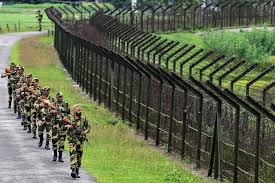
In a disturbing trend unfolding along the Indo-Bangladesh border, children—some barely seven years old—are being used as carriers for gold and narcotics. A recent case from West Bengal’s North 24 Parganas has once again exposed the extent of child exploitation by smuggling networks.
On October 22, the quiet village of Daharkanda in Hakimpur appeared to be going about its usual morning routine when BSF personnel from the 143 battalion spotted a 12-year-old boy moving suspiciously toward the border. Dressed in a pink T-shirt and black shorts, he was intercepted before he could cross over. Inside a black polythene packet, the BSF found 11 gold biscuits weighing over 1.2 kg—worth ₹1.64 crore.
The child later told officials that his mother had instructed him to deliver the packet to a specific location. Both the boy and the seized gold were handed over to customs, and he was produced before the Juvenile Justice Board as a Juvenile in Conflict with Law. His father, pleading for the child’s release, said the family had no idea the situation would escalate to this extent—his wife too has been arrested and lodged in Dum Dum jail.
This case is far from isolated. Security agencies have recorded at least 80 cases of children involved in smuggling along the South Bengal Frontier between 2021 and November 2025. This year alone, 11 cases have emerged—seven of them from Swarupnagar, where unfenced stretches make crossings dangerously easy.
Past incidents reveal a troubling pattern. In December 2022, a seven-year-old girl from Murshidabad was found carrying 107 grams of heroin—again on her mother’s instructions. Earlier, in May 2022, a 17-year-old boy from Raninagar was caught with 55 bottles of Phensedyl, a cough syrup widely smuggled into Bangladesh. For the teenager, the job fetched just ₹1,000.
Across the border states of West Bengal, Assam, Meghalaya, Tripura and Mizoram, nearly 864 km of the 4,096-km Indo-Bangladesh border remains unfenced. Officials say around 174 km cannot be fenced at all due to riverine terrain, land disputes and objections from Bangladesh’s border force. These vulnerable stretches have become hotspots for smuggling networks that increasingly use children as shields to avoid suspicion.
In Tripura, BSF jawans last year seized 4,495 Yaba tablets—worth ₹44.9 lakh—from a minor boy. The rising number of seizures reflects a larger surge in smuggling activities. Data submitted to the Lok Sabha show contraband worth ₹461.7 crore was seized along this border in 2024, a dramatic rise compared to ₹137 crore in 2018.

Juvenile offenders, once caught, are produced before district Juvenile Justice Boards. Depending on the type of contraband, they may be detained in juvenile homes for up to three years or assigned community service. Gold-related cases usually lead to shorter detention, while narcotics attract stricter consequences.
A senior BSF officer said the force remains vigilant but stressed that children are victims first. “Smuggling syndicates prey on poverty and vulnerability in border villages. The BSF follows due process, but the real challenge lies in breaking the nexus that recruits these children,” the official said.
As the number of unfenced stretches and smuggling routes increases, security agencies fear more children may be lured into these dangerous networks unless deeper socio-economic vulnerabilities are addressed.



 English
 Gujarati
 Hindi
Hindi Kannada
 Malayalam
 Marathi
 Punjabi
 Tamil
Tamil Telugu