





 India
India

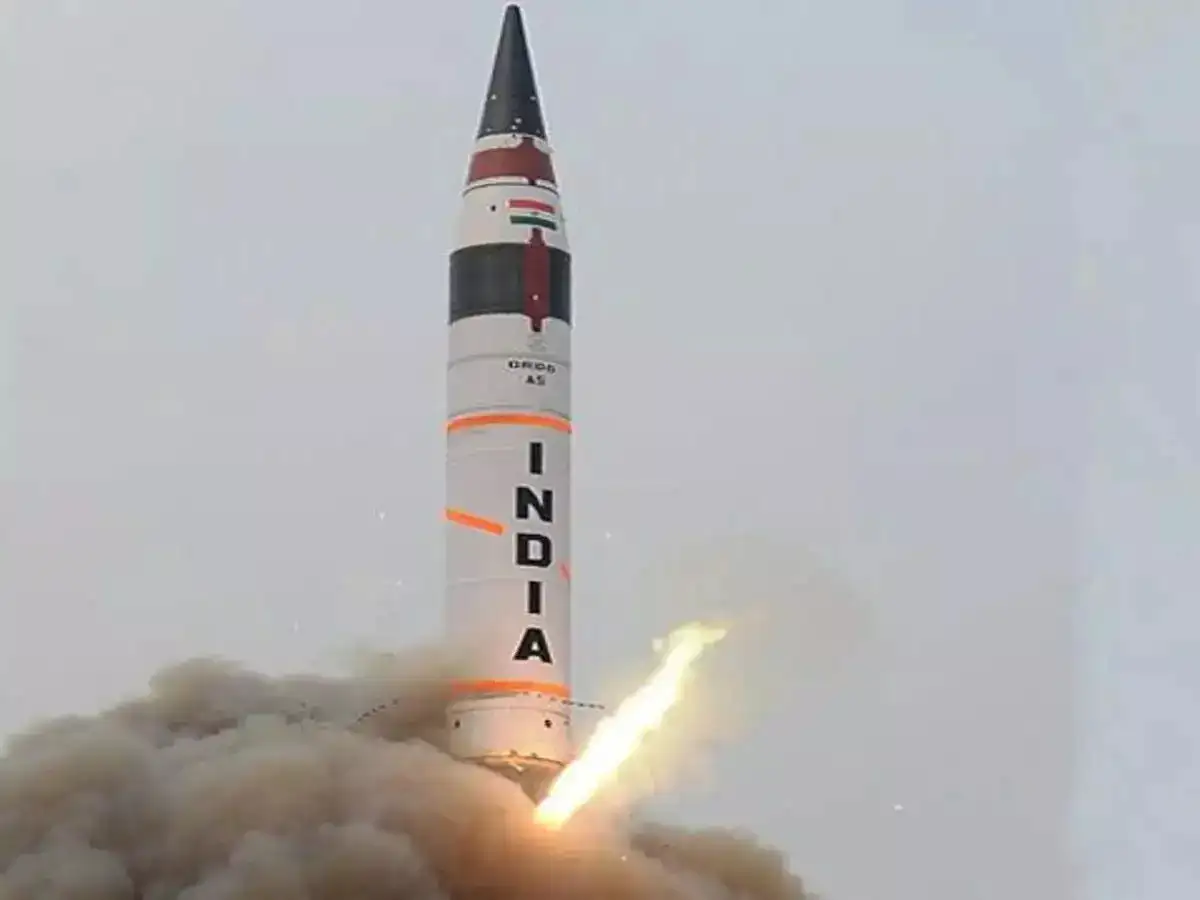
In a significant demonstration of India’s defence prowess, the country successfully test-fired the indigenously developed Agni-5 ballistic missile on Wednesday from the Chandipur testing range in Odisha. According to the Defence Ministry, the launch “validated all operational and technical parameters” and was carried out under the aegis of the Strategic Forces Command, reflecting the nation’s advancing missile technology.
The Agni-5 missile, an intermediate-range ballistic missile, has a striking capability of up to 5,000 kilometres. Its range allows it to cover nearly the entire Asian continent, including northern China, and parts of Europe, underscoring India’s strategic reach. While officials did not link the test directly to the recent military tensions with Pakistan, it comes less than four months after a border confrontation between the two nations.
The missile tested on Wednesday is a variant of the Agni-5 intercontinental ballistic missile (ICBM), with an extended range of around 7,000 kilometres. The Defence Research and Development Organisation (DRDO), responsible for developing the missile, is reportedly planning further upgrades that could extend its range to 7,500 kilometres. Last year, India conducted the maiden flight test of a MIRV-capable Agni-5, which allows the missile to carry multiple independently targetable nuclear warheads, enhancing its deterrence capabilities.
Prime Minister Narendra Modi lauded the DRDO scientists for their dedication and technical expertise in achieving this milestone. India had also successfully test-fired the Agni-5 in March of last year, adding continuity to the country’s missile development program.
India’s missile arsenal includes the Agni 1 to 4 series, with ranges spanning from 700 km to 3,500 km, all of which are operational. In recent months, the country has also test-fired other nuclear-capable short-range missiles, including Prithvi-II, with a 350 km range and up to 500 kg payload, and Agni-I, with a 700-900 km range capable of carrying a 1,000 kg payload. Both missiles form a critical part of India’s nuclear deterrence framework.
Additionally, in July, India successfully tested the tactical missile ‘Pralay’, a short-range surface-to-surface system designed to carry conventional warheads weighing between 500 kg and 1,000 kg. The continued testing and development of these missile systems highlight India’s focus on strengthening its defence readiness and strategic capabilities






 English
 Gujarati
 Hindi
Hindi Kannada
 Malayalam
 Marathi
 Punjabi
 Tamil
Tamil Telugu