

 India
India

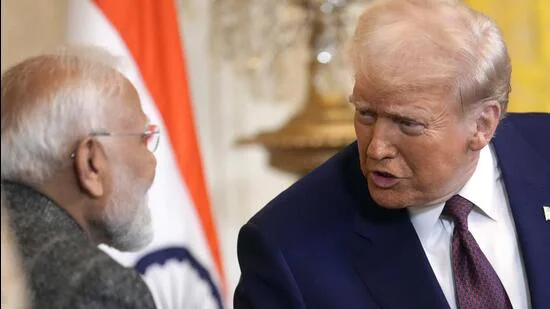
India on Wednesday underscored that a proposed bilateral trade agreement with the United States remains just as critical as its newly concluded free trade agreement (FTA) with the European Union, even after New Delhi and Brussels finalised what officials have described as the “mother of all trade deals” during the India-EU Summit this week.
People familiar with the matter said India and the US have made “very significant” progress in negotiations for a bilateral trade pact that has been stalled since President Donald Trump imposed steep tariffs on Indian goods last year. While most of the technical discussions have already been wrapped up, the deal now requires political clearance from the top leadership on both sides to move forward.
Officials rejected the suggestion that the India-EU FTA should be seen as a strategic response to a downturn in India-US relations. According to them, the American market is as important for India as the European Union, and New Delhi continues to pursue trade expansion with both blocs in parallel.
“As far as the US deal is concerned, we have made very significant progress. We are very close to seeing it come to fruition. The two sides remain in touch,” one of the people said, adding that Indian trade negotiators continued discussions with their American counterparts even during the final stages of talks with the EU.
India’s exports to the EU currently stand at around $76 billion annually, while exports to the US are valued at approximately $86 billion. “Exports to both markets must grow because that directly translates into job creation and expanded manufacturing at home,” another official said. “The US market is as important, if not more important, and we have to stay focused on getting that deal across the finish line.”
Trade negotiations with Washington slowed sharply after Trump imposed a 25% reciprocal tariff on Indian goods, followed by an additional 25% punitive levy linked to India’s purchases of Russian oil. Bilateral ties were further strained by Trump’s repeated claims of mediating a ceasefire between India and Pakistan during last year’s brief conflict, tighter US immigration norms, and persistent criticism of India’s defence and energy ties with Russia.
External affairs minister S Jaishankar’s visit to Washington on February 4–5 is expected to inject momentum into the trade talks. He is scheduled to attend the US-led inaugural ministerial meeting on critical minerals, which is likely to include a bilateral meeting with secretary of state Marco Rubio. The discussions will focus on strengthening supply chains for rare earths, with India also expected to join Pax Silica, a US initiative aimed at building secure global semiconductor and AI supply chains.
Officials also dismissed reports that the pace of India-EU negotiations accelerated primarily due to disruptive US trade policies. They said the issue was not raised by either side during the summit.
On China, officials clarified that India has no plans to revisit its decision to stay out of the Regional Comprehensive Economic Partnership (RCEP) for now, citing unresolved economic concerns. They noted, however, that several EU member states are recalibrating their China strategies to reduce over-dependence and build more resilient supply chains—an approach India has long advocated.


 English
 Gujarati
 Hindi
Hindi Kannada
 Malayalam
 Marathi
 Punjabi
 Tamil
Tamil Telugu