


 India
India

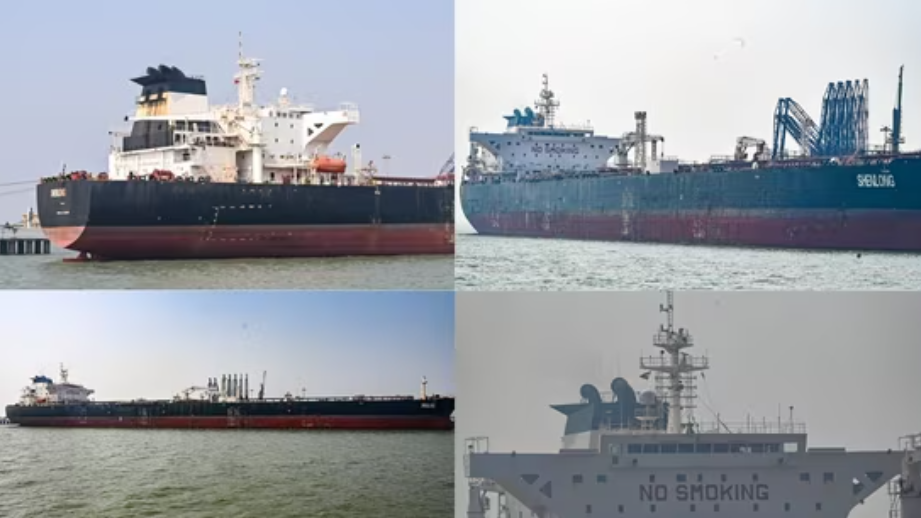
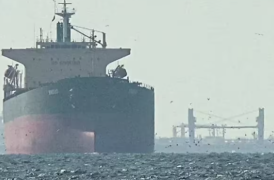
In a significant development for India’s energy supply chain amid rising tensions in the Middle East, a crude oil tanker bound for India has successfully navigated the sensitive Strait of Hormuz and docked at Mumbai Port. The vessel, named Shenlong, is the first India-bound ship to cross the strategic waterway and reach Indian shores since maritime routes in the region were disrupted by the ongoing conflict involving the United States, Israel, and Iran.
The Liberia-flagged Suezmax tanker had loaded crude oil at Ras Tanura in Saudi Arabia on March 1 and departed two days later. The ship’s journey drew attention because shipping activity in the Strait of Hormuz has been severely affected since hostilities escalated in the region on February 28, raising fears among global shipping companies about the safety of vessels passing through the narrow corridor.
According to maritime tracking data from Lloyd’s List Intelligence and TankerTrackers, the tanker’s last known signal while travelling through the Strait of Hormuz was recorded on March 8. During the most sensitive stretch of its journey, the vessel briefly disappeared from public tracking systems after switching off its Automatic Identification System (AIS), a move commonly used by ships when passing through high-risk areas.
The ship later reappeared on global tracking databases on March 9 before continuing its voyage toward India.
Port authorities confirmed that the tanker arrived at Mumbai Port at around 1 pm on Wednesday and was berthed at Jawahar Dweep by 6.06 pm. Officials said the vessel is carrying approximately 1,35,335 metric tonnes of crude oil, which will be supplied to refineries located in Mahul in eastern Mumbai.
“The ship Shenlong is carrying 1,35,335 metric tonnes of crude oil. It has berthed at Jawahar Dweep and has begun discharging the cargo,” said Praveen Singh, deputy conservator of the Mumbai Port Authority.
The unloading operation is expected to take nearly 36 hours to complete.

The tanker is owned by Shenlong Shipping Ltd and managed by Dynacom Tanker Management Ltd. Port handling operations are being coordinated by Atlantic Global Shipping.
Jitendra Jadhav from Atlantic Global Shipping said the vessel carries a multinational crew of 29 members, including Indians, Pakistanis, and Filipinos. The tanker is captained by Sukshant Singh Sandhu, an Indian national.
Meanwhile, two Indian-flagged ships have also reportedly been allowed to transit through the Strait of Hormuz despite heightened security concerns. Sources indicated that the vessels began their passage between Wednesday night and Thursday morning, though an official confirmation is still awaited.
The Strait of Hormuz remains one of the world’s most vital energy corridors, with nearly one-fifth of global crude oil supplies passing through the narrow channel. However, the ongoing conflict has turned the waterway into a high-risk zone.
Iran has previously warned that oil shipments through the strait could face restrictions, especially amid escalating hostilities in the region. Several merchant ships have reportedly faced attacks or threats, prompting many shipping operators to either delay voyages or reroute vessels.
According to India’s Directorate General of Shipping, at least 28 Indian-flagged vessels are still operating in or near the broader region following the outbreak of the conflict. Some ships have already moved away from the danger zone.
Seven vessels — Desh Mahima, Desh Abhiman, Swarna Kamal, Vishva Prerna, Jag Viraat, Jag Lokesh and LNGC Aseem — have sailed into the Arabian Sea. Another ship, Jag Lakshya, has moved toward Angola.
The safe arrival of the Shenlong is being seen as a crucial moment for India’s energy logistics, offering some reassurance that oil supply lines through the Strait of Hormuz, though risky, remain operational despite the volatile geopolitical environment.




 English
 Gujarati
 Hindi
Hindi Kannada
 Malayalam
 Marathi
 Punjabi
 Tamil
Tamil Telugu