




 India
India

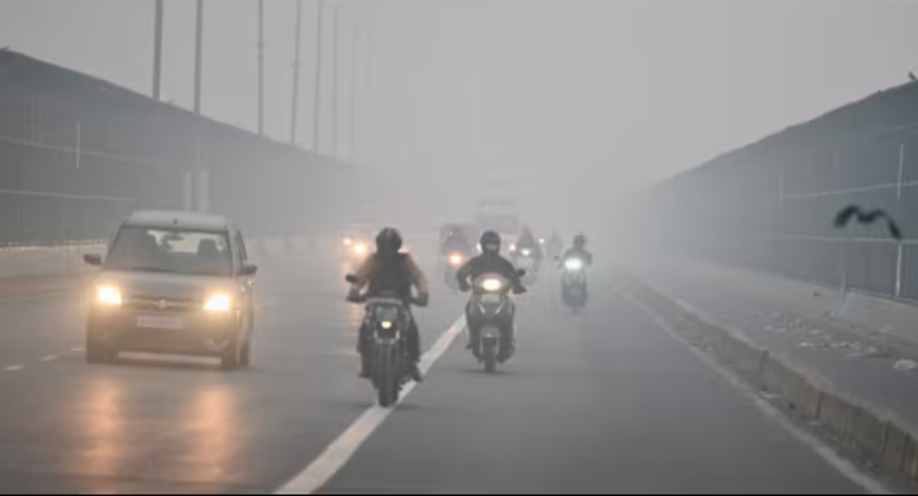
Delhi witnessed a marginal improvement in air quality on Tuesday morning after enduring three consecutive days of “severe” pollution, the worst such stretch for the month of January since 2021. While the average Air Quality Index (AQI) dropped to 395 at 8am, bringing it down from Monday’s reading of 410, the air remained dangerously toxic, keeping the city firmly in the “very poor” category.
According to data from the Central Pollution Control Board (CPCB), Delhi’s AQI had peaked at 440 on Sunday and stood at 400 on Saturday, marking an alarming run of extreme pollution levels. The last time the capital recorded three straight days with AQI readings of 400 or above was between January 14 and 16, 2021. Notably, Delhi has never experienced four consecutive “severe” air quality days in January, a record that was narrowly avoided this week.
Despite the marginal improvement, the situation on the ground remained grim. Of the 39 active air quality monitoring stations across the city, 23 were still reporting “severe” air quality on Tuesday morning. This was only a slight relief compared to Monday, when 25 stations were in the severe category, and Sunday, when as many as 33 stations crossed the dangerous threshold.
Certain pollution hotspots continued to choke under extreme conditions. Wazirpur recorded the worst air quality on Tuesday with an AQI of 445, followed closely by Anand Vihar at 444. Just a day earlier, Wazirpur had touched an alarming AQI of 473, while Vivek Vihar stood at 472, highlighting how persistent and localised pollution sources remain a major concern.
Weather conditions offered little help. Shallow to moderate fog enveloped parts of the city, trapping pollutants closer to the surface. The minimum temperature settled at 7.2 degrees Celsius, which is around normal for this time of year, while the maximum temperature soared to 26.7 degrees Celsius on Monday, nearly seven degrees above the seasonal average. On Tuesday, the maximum temperature is expected to remain between 23 and 25 degrees Celsius, conditions that do not favour rapid dispersion of pollutants.
Experts have warned that despite the implementation of Graded Response Action Plan (GRAP) Stage 4 measures, enforcement on the ground remains critical. They stressed the need to strictly restrict the movement of highly polluting vehicles, enforce dust-control norms at construction sites, and curb open biomass and waste burning. Citizens have also been urged to follow the GRAP citizens’ charter by minimising outdoor exposure, using public transport where possible, avoiding open burning, and wearing masks to reduce health risks.
Forecasts suggest that Delhi’s air quality is likely to remain in the “very poor” category until at least Friday, underscoring the fragile nature of the improvement and the urgent need for sustained action to prevent another slide into severe pollution.






 English
 Gujarati
 Hindi
Hindi Kannada
 Malayalam
 Marathi
 Punjabi
 Tamil
Tamil Telugu