




 India
India

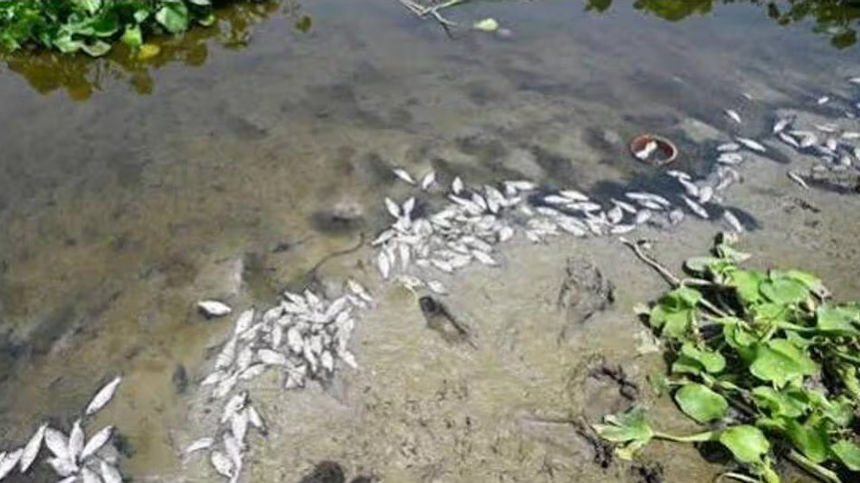
Several dead fish have been spotted along the Yamuna river near Burari in north Delhi since Wednesday night, October 14, raising fresh concerns about water pollution and the river’s deteriorating ecological health. Wildlife conservationists, river activists and local boatmen have flagged the incident, with possible causes including untreated industrial discharge, toxic pollutants and dangerously low levels of dissolved oxygen in the water.
Wildlife enthusiast and conservationist Hemant Garg, who observed the dead fish, said thousands had been found along the river, extending upstream to Shank numbers 10, 11 and 12. He warned that the incident required urgent attention, particularly because parts of the river are associated with drinking water sources.
Garg said that he and other wildlife enthusiasts regularly visit the Yamuna for conservation activities, bird censuses and wildlife tracking. According to him, the water in the affected stretch is usually relatively clean, making the sudden appearance of large numbers of dead fish particularly concerning.
Local boatman Ranjan Mukhia also reported a strong stench coming from the river. He said reports of dead fish were not limited to Burari, with fellow boatmen claiming that similar sightings had been reported upstream in Haryana. Boatmen have also been removing fish carcasses to prevent further deterioration of water quality.
Industrial pollution suspected as river activists seek action
Bhim Singh Rawat, a Yamuna activist and member of the South Asia Network on Dams, Rivers and People (SANDRP), said mass fish deaths are more commonly reported during summer, when higher temperatures can reduce dissolved oxygen levels in water. He noted that such an incident during the winter months was unusual.
Rawat suggested that untreated industrial effluents could be responsible for the fish mortality. He identified Drain No. 2 from Panipat, Drain No. 8 and a drain in Burari as possible sources that may have discharged large quantities of untreated industrial waste into the river. He also pointed to restricted river flow despite the monsoon season.
However, the specific cause of the latest fish deaths has not yet been established, and the suspected sources of pollution require investigation.

Yamuna activist Pankaj Kumar has written to the Delhi Pollution Control Committee, urging immediate intervention. He described mass fish mortality as a critical indicator of ecological stress, highlighting low dissolved oxygen, high biochemical oxygen demand (BOD) and toxic industrial effluents as possible contributing factors.
Kumar also raised concerns about public health, warning that if toxic substances were present in concentrations sufficient to kill fish, water being extracted downstream at Wazirabad for drinking purposes could pose a potential health risk.
The New Delhi Nature Society, in a post on X, reported that hundreds, possibly thousands, of fish had been found dead near Burari on October 14. While the organisation said the cause had not been established, it noted local allegations that chemical waste could have entered the river from Haryana through canals. It also questioned whether the incident could be linked to acid rain reported on October 12, although no confirmed connection was established.
Previous fish deaths raise concerns over recurring pollution
The latest incident follows several similar episodes in Delhi. In May 2026, hundreds of fish died at Sanjay Lake in east Delhi during a heatwave and as water levels receded. Experts cited high temperatures, concentrated pollutants and declining dissolved oxygen as possible factors.
In April 2026, thousands of dead fish surfaced in Delhi’s Najafgarh drain, with locals suspecting industrial effluents from Haryana. Hundreds of dead fish were also reported along the Yamuna near Burari in May 2025 and July 2024.
Yamuna water quality deteriorates despite monsoon
The latest fish deaths come amid continuing concerns over the Yamuna’s water quality. The river’s September 2026 water quality report showed that pollution levels remained high at several locations in Delhi, despite the monsoon season. A comparison with September 2025 indicated significant increases in biochemical oxygen demand and faecal coliform levels at multiple monitoring points.
At Palla, faecal coliform levels rose to 1,100 MPN per 200 millilitres in September 2026, compared with 790 a year earlier. At the ISBT Bridge, the level surged to 35,000, up from 2,800 in September 2025. At Okhla barrage, levels reached 21,000, six times the 3,500 recorded during the corresponding period last year.
Faecal coliform bacteria are indicators of contamination, often associated with untreated sewage. The ideal level is below 500 units, while the stated maximum limit is 2,500 units.
Other indicators also showed deterioration. At the ISBT Bridge, BOD increased to 30 milligrams per litre from 8 mg/l recorded on September 3 last year, while chemical oxygen demand (COD) rose from 44 mg/l to 92 mg/l. At ITO Bridge, BOD climbed from 4 mg/l to 18 mg/l, and COD increased from 20 mg/l to 60 mg/l. Faecal coliform levels there rose from 1,800 to 17,000 MPN per 100 millilitres.
For bathing water, the specified BOD level is 3 mg/l or less, while dissolved oxygen should be at least 5 mg/l.
The latest fish deaths have renewed calls for urgent water-quality testing, investigation of suspected industrial discharge points and stronger monitoring of the Yamuna. Until the cause is established, the incident remains a warning sign of possible ecological stress in a river already facing persistent pollution challenges.






 English
 Gujarati
 Hindi
Hindi Kannada
 Malayalam
 Marathi
 Punjabi
 Tamil
Tamil Telugu