


 India
India

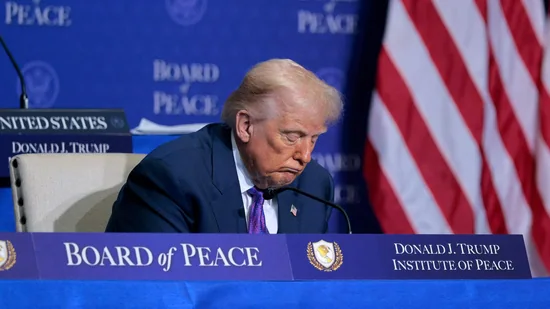
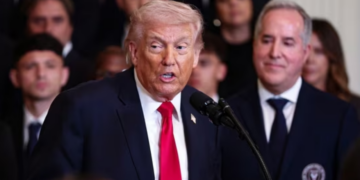
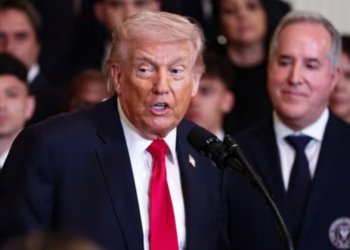
The US Supreme Court delivered a major setback to former President Donald Trump on Friday, striking down his broad tariffs imposed under the International Emergency Economic Powers Act (IEEPA). In a 6-3 decision, the court upheld a lower court ruling that Trump had exceeded his authority by using a law intended for national emergencies to levy sweeping import taxes.
The ruling, authored by Chief Justice John Roberts, drew an unusual coalition of justices. Conservative justices Neil Gorsuch and Amy Coney Barrett, both appointed by Trump, joined the three liberal justices in siding with Roberts. Dissenting from the decision were conservative justices Clarence Thomas, Samuel Alito, and Brett Kavanaugh. The court’s majority emphasized that the president cannot act without “clear congressional authorization” when taking actions with vast economic and political consequences.
“The president must point to clear congressional authorization to justify his extraordinary assertion of the power to impose tariffs,” Chief Justice Roberts wrote. “He cannot.” The ruling underscores the Supreme Court’s application of the “major questions” doctrine, which limits executive overreach in areas of significant economic and political impact—a principle the court has previously used to block some executive actions under the Biden administration.
Trump’s use of IEEPA marked a historic first. The law, enacted in 1977, grants the president authority to regulate commerce only during national emergencies. Trump, however, applied it to impose tariffs on nearly all US trading partners without seeking congressional approval. Businesses affected by these tariffs, along with 12 Democratic-governed states, challenged his actions in court, arguing that the move violated the separation of powers enshrined in the US Constitution.
Trump defended the tariffs as essential for US economic security, claiming that without them, the country would be “defenseless” and exploited by other nations, particularly China. He argued that decades of unfair trade practices by other countries had left the US at a disadvantage, and his tariffs were a corrective measure. Despite these claims, the Supreme Court made it clear that such sweeping economic measures require legislative backing, not unilateral executive action.
This landmark ruling carries major implications for global trade, US foreign policy, and the balance of power between the executive and legislative branches. It also serves as a reminder of the legal limits on presidential authority, even for measures framed as critical to national security or economic protection.




 English
 Gujarati
 Hindi
Hindi Kannada
 Malayalam
 Marathi
 Punjabi
 Tamil
Tamil Telugu