



 India
India

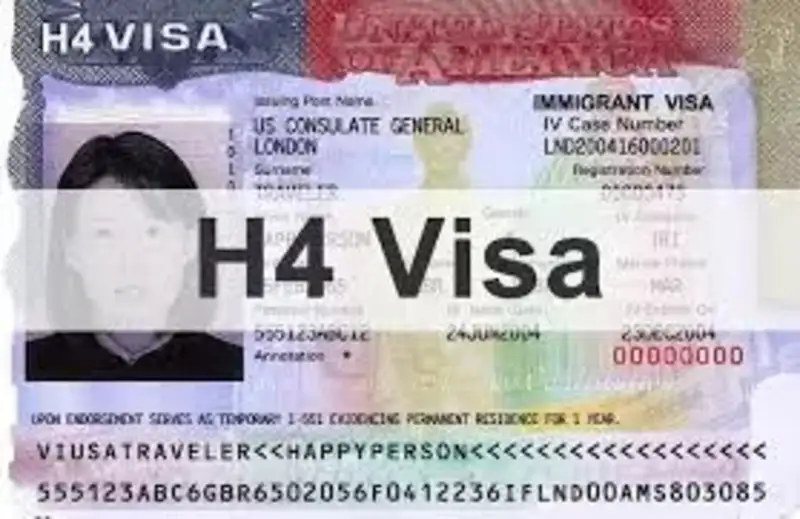
In a major relief for thousands of families of skilled foreign workers in the United States, the Supreme Court on Tuesday declined to hear a petition that challenged the work authorization of H-4 visa holders—dependents of H-1B visa workers. The decision effectively upholds an Obama-era rule that allows certain H-4 spouses to seek employment in the U.S., ending years of legal uncertainty that had kept many families in limbo.
The petition, filed by Save Jobs USA, argued that allowing H-4 visa holders to work was unlawful and unfair to American workers. The group, representing U.S. tech professionals, claimed the Department of Homeland Security (DHS) had exceeded its legal authority by granting employment authorization to H-4 dependents. “DHS reversed its earlier interpretation with the H-4 Rule and began allowing certain spouses of H-1B nonimmigrant workers to be employed, despite no such directive in the statute,” the lawsuit stated.
However, by refusing to revisit the case, the Supreme Court has preserved the lower court’s rulings that favored H-4 visa holders. Last year, the D.C. Circuit Court upheld a prior decision dismissing Save Jobs USA’s 2015 lawsuit, ruling that the DHS acted within its authority.
The court’s decision comes as a major boost for thousands of Indian and Chinese spouses, who form the majority of H-4 visa holders. Many of them are highly educated professionals who were previously unable to work despite their qualifications. Over the years, the H-4 Employment Authorization Document (EAD) has enabled many spouses to start their own businesses, pursue careers, and contribute to the U.S. economy.
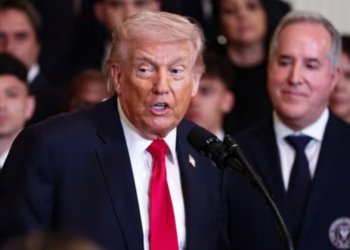
The development also comes amid the Trump administration’s renewed push to tighten work visa rules. Former President Donald Trump recently proposed a $100,000 fee for each new H-1B employee, a move seen as part of a broader attempt to discourage hiring of foreign talent. Reports also suggest that DHS may propose rule changes restricting work rights for H-4 dependents in the future.
For now, though, the Supreme Court’s dismissal of the petition has brought much-needed stability to families who have faced years of uncertainty. Immigration advocates have welcomed the move, calling it a victory for fairness and inclusion in the U.S. workforce. Yet, as political winds shift, many remain cautious about the long-term future of H-4 employment rights.




 English
 Gujarati
 Hindi
Hindi Kannada
 Malayalam
 Marathi
 Punjabi
 Tamil
Tamil Telugu