

 India
India

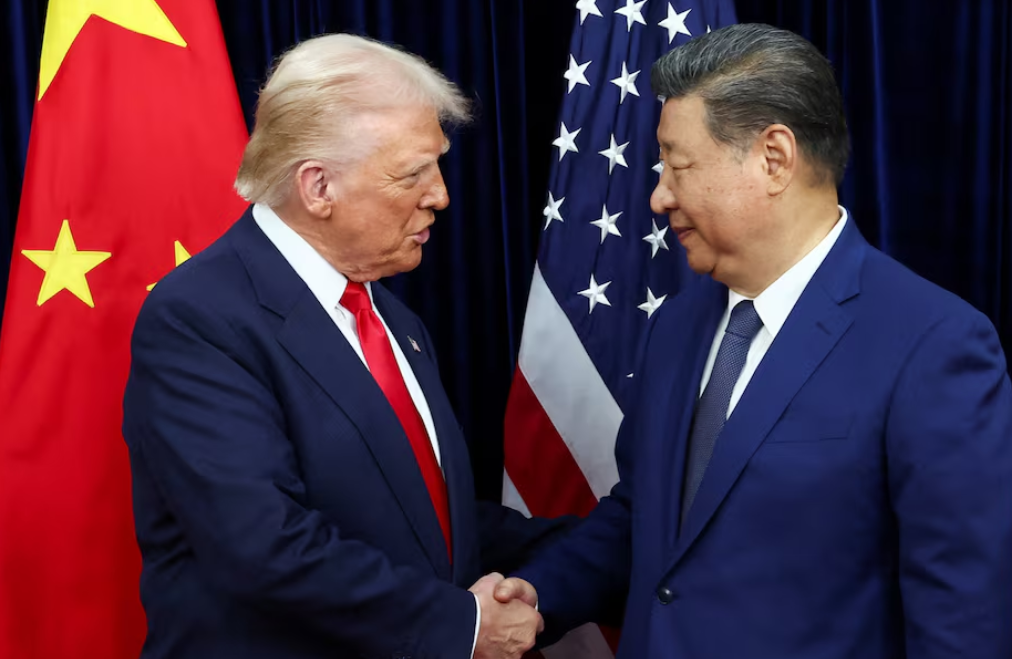
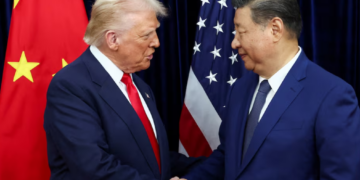
Senior officials from the United States and China resumed economic and trade negotiations in Paris on Sunday, marking a key step ahead of an expected summit between U.S. President Donald Trump and Chinese President Xi Jinping later this month.
Delegations from both sides gathered in the French capital to address a range of economic issues that have strained relations between the world’s two largest economies. The talks are seen as an important precursor to Trump’s planned state visit to China from March 31 to April 2, a trip that could significantly shape the direction of bilateral ties.
According to China’s state news agency Xinhua, the discussions are being led by U.S. Treasury Secretary Scott Bessent and Chinese Vice Premier He Lifeng. The meeting began Sunday morning in Paris and is expected to continue into Monday as both sides attempt to address long-standing economic disputes.
The U.S. Treasury Department confirmed that Bessent will hold direct discussions with He Lifeng during the two-day meeting. In remarks earlier this week, Bessent emphasized that the American delegation aims to secure outcomes that benefit U.S. farmers, workers and businesses while maintaining pressure on issues Washington considers unfair trade practices.
China’s Commerce Ministry also confirmed the meeting, saying the talks would focus on “trade and economic issues of mutual concern.” Officials from Beijing have expressed hope that dialogue could help stabilize relations that have been strained by tariff disputes, regulatory concerns and broader geopolitical tensions.
Trump’s upcoming visit would mark the first trip by a sitting U.S. president to China since his earlier visit during his first term in 2017. The planned summit comes roughly five months after Trump and Xi met in the South Korean city of Busan, where they agreed to a one-year truce in a heated trade conflict that had previously seen both countries impose tariffs exceeding 100 percent on certain goods.
Despite that temporary truce, trade tensions have remained a persistent challenge. China recently criticized the Trump administration after Washington launched a new trade investigation targeting 16 trading partners, including China. The probe followed a ruling by the U.S. Supreme Court that struck down Trump’s sweeping global tariffs introduced last year, potentially opening the door for new tariff measures.

Beyond trade, global geopolitical issues may also influence the discussions in Paris. The ongoing conflict involving Iran and the resulting concerns over global oil supplies have added another layer of complexity to the talks. Trump recently called on major powers—including China, France, Japan, South Korea and the United Kingdom—to contribute naval forces to ensure the safety of shipping through the strategically vital Strait of Hormuz.
Analysts believe the Paris negotiations could be the most significant bilateral engagement before the anticipated Trump-Xi summit. Gary Ng, a senior economist at the French bank Natixis, said the key challenge will be whether both countries can manage their disagreements while maintaining areas of cooperation.
Ng noted that while the Iran conflict has introduced new geopolitical pressures, Beijing’s primary concern remains the unpredictability of U.S. trade policies and the potential for sudden policy shifts.
Chinese Foreign Minister Wang Yi recently described 2026 as a “big year” for China-U.S. relations, suggesting that high-level exchanges between the two countries are already being planned.
Bessent and He Lifeng have been central figures in negotiations between the two nations over the past year, holding meetings in multiple global cities including Geneva, London, Stockholm, Madrid and Kuala Lumpur. The Paris talks now represent another attempt by Washington and Beijing to stabilize economic relations before their leaders meet face-to-face in Beijing.



 English
 Gujarati
 Hindi
Hindi Kannada
 Malayalam
 Marathi
 Punjabi
 Tamil
Tamil Telugu