



 India
India



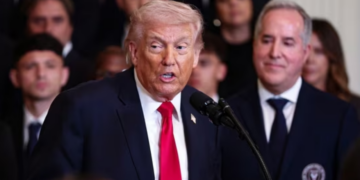
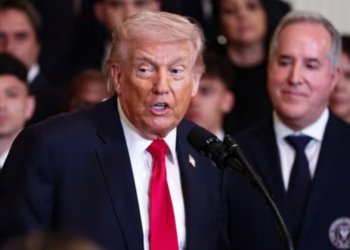
American President Donald Trump has announced a sweeping 100% tariff on all foreign-made movies, a move that could deal a heavy blow to India’s thriving film exports. The decision, which Trump unveiled on Truth Social, adds another layer of uncertainty to India-US trade relations and marks the first time cultural industries have been directly hit by his tariff-heavy policies.
The impact on Indian cinema could be significant. Recent blockbusters such as Shah Rukh Khan and Deepika Padukone’s Jawan, Prabhas’s Baahubali series, and Ranbir Kapoor’s Animal have all earned millions of dollars in the US market. According to IMDb data, Baahubali 2 grossed $22 million in the US, while films like RRR, Pathaan, Jawan, Kalki 2898 AD, and Animal each earned between $15–19 million.
The Indian diaspora spends nearly $100 million annually on movies in the US across languages including Hindi, Telugu, Tamil, Malayalam, Punjabi, and Bengali. Trade experts fear that ticket prices could double under the new tariff regime, potentially rising from $10–15 to $20–30 per ticket. “If a film is bought for ₹5 crore to release in the US, distributors may end up paying ₹10 crore. The extra burden will inevitably pass on to audiences,” explained analyst Sreedhar Pillai.
Industry insiders remain puzzled about how a tariff on movies—largely digital products—will even be implemented. With modern filmmaking relying on cross-border production and online processes, enforcing such a tax poses logistical challenges. However, what is clear is that both theatrical releases and digital platforms could face steep cost increases, threatening profitability for studios and reducing accessibility for audiences.
Ashish Kulkarni, a leading animation and VFX expert, warned that “all channels of movie showing and viewing will be impacted and become more costly,” while Shibasish Sarkar of the Producers Guild of India predicted a decline in footfall if ticket prices soar.
Trump defended his decision by claiming, “Our movie-making business has been stolen from the United States of America, just like stealing candy from a baby.” But analysts caution that Hollywood could also suffer if other countries retaliate with similar restrictions. Already, major US studios like Warner Bros Discovery, Paramount Skydance, and Netflix rely heavily on overseas productions and international revenues.
For now, the move deepens uncertainty for both Indian and global studios at a time when trade negotiations between New Delhi and Washington remain fragile. With tariffs on Indian goods already at 50%—half of which Trump calls a penalty for India’s Russian oil imports—the latest measure underscores his inward-looking economic strategy that has begun targeting culture as well as commerce.




 English
 Gujarati
 Hindi
Hindi Kannada
 Malayalam
 Marathi
 Punjabi
 Tamil
Tamil Telugu