

 India
India

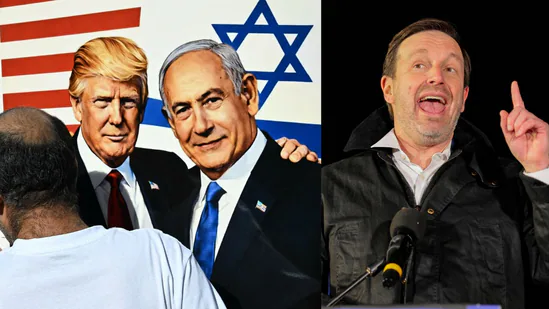
A senior American lawmaker has sharply criticised US President Donald Trump over his handling of the escalating conflict with Iran, warning that Washington underestimated Tehran’s military capabilities and now appears to lack a clear strategy to end the war.
Speaking through a series of posts on X, Democratic senator Chris Murphy said the situation has become increasingly dangerous as the war enters its third week, with tensions spreading across the Middle East and global energy markets already showing signs of strain.
Murphy, who represents the state of Connecticut, said it had become “crystal clear” that the US administration had miscalculated Iran’s ability to retaliate and disrupt critical trade routes. Drawing on what he described as “closed-door briefings” about the crisis, the senator outlined four major developments that he believes show the conflict slipping beyond Washington’s control.
According to Murphy, the first major miscalculation involved the strategic importance of the Strait of Hormuz. Trump’s administration believed Iran would not attempt to shut down the vital oil shipping lane, but that assumption has proven wrong. With tensions rising in the Gulf, global oil prices have already started climbing, and Murphy warned that a prolonged disruption could push the global economy toward recession.
He argued that reopening the shipping corridor would be extremely difficult because Iran possesses thousands of small drones, speedboats, and naval mines capable of harassing or attacking oil tankers. These assets, he said, are dispersed and difficult to neutralise, making any attempt to secure the route a complex logistical challenge even with US naval escorts.
Murphy’s second concern focuses on Iran’s expanding drone capabilities. He said modern warfare has increasingly shifted toward drone-based combat, and Iran possesses a large supply of low-cost weaponised drones capable of repeatedly striking energy infrastructure in the region.
The senator pointed to a recent attack on an oil depot in Oman as an example of how these drones could continue to disrupt global energy supplies. He also warned that Gulf nations are reportedly running low on interceptor missiles needed to defend against such attacks, potentially leaving critical facilities more vulnerable in the coming weeks.

A third crisis highlighted by Murphy involves the growing risk of a wider regional war. Iranian-backed groups in Lebanon have increased attacks on Israel, while militia groups in Iraq have targeted American assets. Meanwhile, Israel has threatened a possible ground invasion of Lebanon, raising fears that the conflict could open another major front in the region.
Murphy also warned that other flashpoints remain unpredictable. Yemen’s Houthi movement could begin targeting shipping in the Red Sea, while the fragile situation in Syria could deteriorate further if hostilities intensify.
However, the senator described the most alarming issue as the absence of a clear American endgame. According to him, the administration has not presented a coherent long-term plan for how the conflict will conclude or what objectives Washington hopes to achieve.
Murphy argued that Iran and its regional allies have the ability to prolong instability indefinitely through asymmetric warfare. He questioned whether the United States was prepared for the consequences of escalation, including the possibility of a ground invasion that could result in heavy American casualties.
The Democratic lawmaker said the conflict was “entirely foreseeable” and warned that prolonging it without a defined strategy could lead to an even larger disaster. He urged the US administration to reassess its approach and pursue a path that would prevent further escalation across the Middle East.
Earlier in the week, Murphy had also criticised the administration following a two-hour congressional briefing on the war. He described the current strategy as “incoherent and incomplete,” adding that the White House appears to be shifting its goals—from regime change in Iran to dismantling Tehran’s nuclear program—without a clear roadmap for achieving either objective.




 English
 Gujarati
 Hindi
Hindi Kannada
 Malayalam
 Marathi
 Punjabi
 Tamil
Tamil Telugu