



 India
India

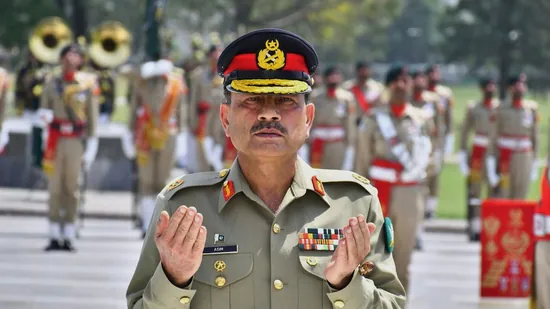
Amid escalating tensions between Pakistan and Afghanistan, Pakistan Army Chief Field Marshal Syed Asim Munir on Saturday issued a stern warning to Kabul, urging the Taliban-led government to take decisive action against terrorists operating from Afghan soil. Speaking at a passing-out parade at the Pakistan Military Academy (PMA) in Kakul, Abbottabad, Munir emphasized that Afghanistan must choose between “peace and chaos,” highlighting the urgency of curbing cross-border militancy.
Field Marshal Munir blamed armed groups based in Afghanistan for recent attacks on Pakistani territory. “All proxies using Afghan soil to target Pakistan will be met with a response to raise them to dust,” he stated, making it clear that Islamabad views inaction as a threat to regional stability. The COAS’s remarks come amid a series of cross-border incidents that have further strained relations between the neighboring countries.
Tensions intensified last weekend when Taliban forces reportedly launched retaliatory strikes following allegations of Pakistani attacks near Kabul. The escalating situation saw Pakistan conducting airstrikes in the Urgun and Barmal districts, resulting in civilian casualties, including the deaths of three local cricketers. Afghan authorities have denied that their territory is being used for attacks on Pakistan, maintaining that Kabul is committed to preventing militant activities targeting neighboring countries.
A fragile truce, brokered by Qatar and Saudi Arabia, temporarily halted fighting along the border. The truce was extended to allow ongoing talks in Doha, but hostilities resumed after Pakistan’s retaliatory strikes, underscoring the fragile nature of peace efforts. According to Pakistani security officials, the ceasefire agreements were made with the Afghan Taliban but did not extend to Islamist militants operating independently from Afghan territory, such as the banned Tehreek-i-Taliban Pakistan (TTP).
The conflict has been exacerbated by repeated attacks from TTP militants allegedly using Afghan soil, including a recent assault in Orakzai district, Khyber Pakhtunkhwa, which killed 11 Pakistani military personnel, including a Lieutenant Colonel and a Major. Islamabad has repeatedly called on Kabul to prevent such incursions, warning that failure to act will compel Pakistan to respond decisively to protect its sovereignty.
As the situation remains volatile, regional observers stress the importance of diplomatic engagement alongside military measures, warning that continued cross-border violence could destabilize the broader region. The latest developments underscore the complex security dynamics between Pakistan and Afghanistan, where both military action and political negotiation remain critical.





 English
 Gujarati
 Hindi
Hindi Kannada
 Malayalam
 Marathi
 Punjabi
 Tamil
Tamil Telugu