





 India
India

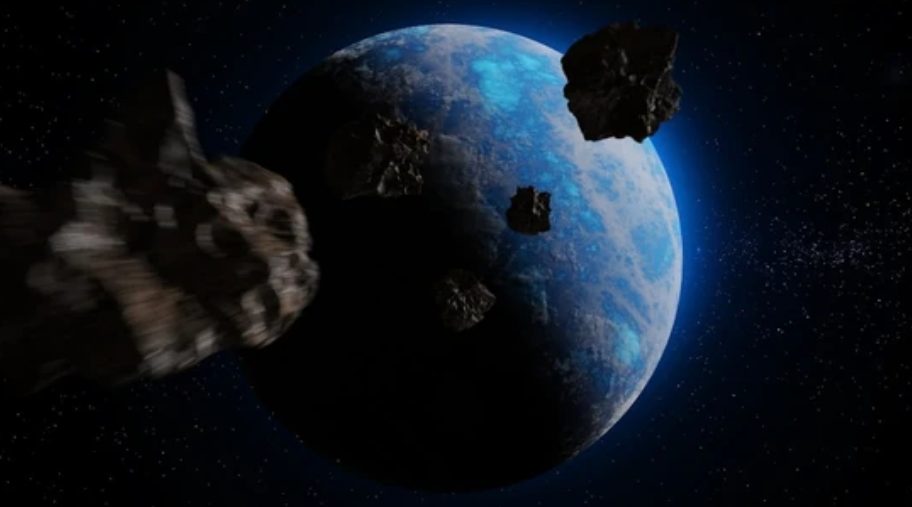
A senior planetary defense expert at NASA has issued a stark warning: thousands of potentially devastating asteroids remain undetected, and Earth is not fully prepared to stop them.
Kelly Fast, a planetary defense officer at NASA, has revealed that what truly worries her are not the massive “planet-killer” asteroids — because scientists already track most of them — nor the tiny space rocks that frequently burn up harmlessly in Earth’s atmosphere. Instead, it is the mid-sized asteroids, often referred to as “city-killers,” that pose the most concerning threat.
According to Fast, there may be nearly 25,000 near-Earth asteroids measuring roughly 500 feet across — large enough to cause catastrophic regional damage if they strike a populated area. Alarmingly, scientists have identified and tracked only about 40% of them. That leaves an estimated 15,000 potentially hazardous objects unaccounted for.
“These are the asteroids we don’t know about,” Fast said, adding that the uncertainty is what “keeps me up at night.”
Unlike larger asteroids, which are easier to detect due to their size and brightness, these mid-sized objects can slip past current detection systems. Many travel in orbital paths that keep them positioned between Earth and the Sun, making them difficult to spot with ground-based telescopes because they reflect little visible light.
To address this gap, NASA is preparing to launch the Near-Earth Object Surveyor space telescope. Unlike traditional telescopes that rely on reflected sunlight, this mission will use infrared technology to detect the heat signatures of dark asteroids and comets — including those that have so far remained hidden.
However, detection is only part of the challenge.
Nancy Chabot, leader of NASA’s Double Asteroid Redirection Test (DART), emphasized that while the 2022 mission successfully altered the orbit of the asteroid moonlet Dimorphos by deliberately crashing a spacecraft into it, replicating such an operation against a newly discovered “city-killer” asteroid would not be simple.
The DART experiment demonstrated that asteroid deflection is technically possible. But Chabot noted that space agencies do not currently have ready-to-launch deflection spacecraft on standby. Funding constraints and long development timelines mean planetary defense systems are not maintained at immediate readiness.
“We would not have any way to go and actively deflect one right now,” she acknowledged, underscoring the urgent need for sustained investment in planetary defense infrastructure.
Adding to the anxiety is asteroid 2024 YR4, which has been under observation since its discovery in 2024. Current projections suggest a small but notable probability of impact in 2032 — around 4%, according to preliminary assessments. While the risk remains low, it highlights the broader vulnerability posed by undetected mid-sized asteroids.
Experts stress that the threat is manageable — but only with proactive measures. With improved detection systems, early warning capabilities, and dedicated deflection technologies, humanity could significantly reduce the risk of a surprise impact.
For now, however, planetary defense remains a race against time — and against the thousands of space rocks we may not yet see coming.







 English
 Gujarati
 Hindi
Hindi Kannada
 Malayalam
 Marathi
 Punjabi
 Tamil
Tamil Telugu