

 India
India

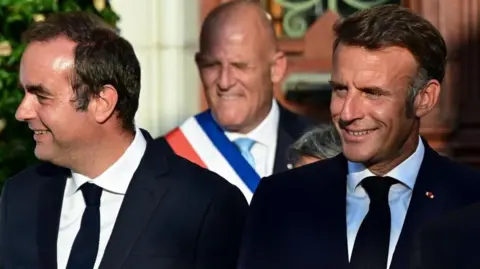
French President Emmanuel Macron on Tuesday appointed Defence Minister Sebastien Lecornu as the new prime minister, replacing Francois Bayrou in an attempt to defuse a rapidly escalating political crisis. The decision came less than a day after Bayrou resigned, following the government’s ouster in a confidence vote.
Lecornu, 39, one of Macron’s most trusted allies, becomes the seventh prime minister under the president’s mandate. His appointment is seen as a strategic choice aimed at ensuring stability rather than broadening political consensus across party lines. The Elysee said Macron has tasked Lecornu with consulting parliamentary forces to secure agreement on a national budget and guide France through critical decisions in the coming months.
In his first statement, Lecornu thanked Macron for his trust and praised Bayrou “for the courage he showed in defending his convictions to the very end.” He pledged to build a government focused on France’s independence, stability, and unity. The formal handover of power between Bayrou and Lecornu is scheduled for Wednesday at midday.
Bayrou, who lasted just nine months in office, fell after parliament rejected his austerity budget plan, which included €44 billion ($52 billion) in spending cuts aimed at reducing France’s debt. The no-confidence vote was decisive, with 364 lawmakers voting against his government and only 194 in support. He became the sixth prime minister to fall under Macron since 2017, and the fifth since 2022.
Macron moved swiftly this time to avoid prolonged instability, mindful of rising borrowing costs and investor concerns. French newspaper Liberation wrote that the president is now “in the front line to find a solution to the political crisis,” while Le Monde described him as “a vulnerable president.”
Lecornu, who has served as defence minister for more than three years, is widely regarded as an effective operator who has consistently supported Ukraine during Russia’s invasion. Unlike many other Macron allies, he is not seen as harbouring presidential ambitions, a factor that strengthens Macron’s confidence in him.
The appointment comes at a time of mounting social unrest. A left-wing collective, “Block Everything,” has called for nationwide protests on Wednesday, while trade unions have announced strikes for September 18. With the 2027 presidential election looming, analysts predict the far right could achieve its strongest-ever performance, especially as Marine Le Pen’s prospects hinge on the outcome of her legal battles.

Reactions to Lecornu’s elevation have been mixed. Le Pen dismissed the move as the “final shot of Macronism,” while the Socialist Party accused the president of ignoring their role and warned of “legitimate social anger.” Former prime minister Edouard Philippe, however, expressed optimism, saying Lecornu “has the qualities” to build consensus with rival parties.
Macron’s choice underscores both the urgency of restoring political stability and his reliance on loyal allies to navigate one of the toughest domestic challenges of his presidency.


 English
 Gujarati
 Hindi
Hindi Kannada
 Malayalam
 Marathi
 Punjabi
 Tamil
Tamil Telugu