

 India
India

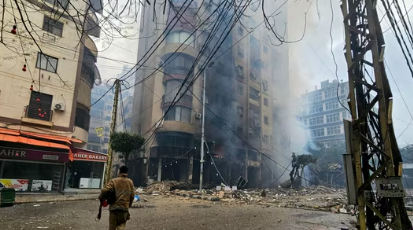
As the war involving Iran, Israel, and the United States continues to escalate, Iran’s Foreign Minister Abbas Araghchi on Sunday said Tehran is open to any initiative that could bring an end to the ongoing conflict. However, he firmly rejected accusations that Iran has targeted civilian or residential areas in neighbouring Arab countries during its military operations.
Speaking amid growing regional tensions, Araghchi stated that Iran is willing to establish a joint investigation panel with regional countries to examine the locations that have been struck during the conflict. According to Iran’s Fars News Agency, Tehran believes that some of the attacks blamed on Iranian weapons could have been orchestrated by Israel to damage Iran’s reputation.
Iran had earlier accused Israel and the United States of attempting to “rebrand” Iranian-made Shahed drone systems to falsely implicate Tehran in strikes that allegedly hit civilian targets in the Middle East.
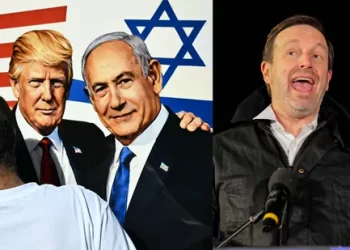
At the same time, rhetoric between the two sides continued to intensify. Iran’s Islamic Revolutionary Guard Corps reportedly issued a threat against Israeli Prime Minister Benjamin Netanyahu, vowing to “pursue and kill” him amid growing hostility between Tehran and Tel Aviv. The remarks came as unverified rumors circulated on social media claiming Netanyahu had been assassinated. However, the Israeli prime minister’s office quickly dismissed those claims, calling them fake and confirming that Netanyahu was safe.
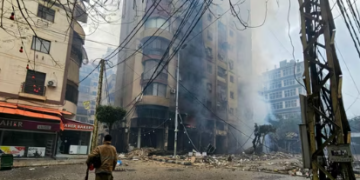
Meanwhile, the conflict appeared to be expanding geographically. Loud explosions were reported in central Israel early Sunday morning following air raid sirens triggered by an Iranian missile strike. Earlier, Iran had launched missiles at Saudi Arabia’s Al Kharj Air Base, a facility used by the US military. The Iranian Revolutionary Guard claimed the base was a key launch point for American F-35 Lightning II and F-16 Fighting Falcon fighter jets involved in attacks against Iranian targets.
Adding to the tensions, loud blasts were also reported in Manama, the capital of Bahrain, though details surrounding the explosions remain unclear.
The United States has also suffered losses during the conflict. The United States Department of Defense confirmed the identities of six American service members who were killed earlier this week when a refuelling aircraft crashed over Iraq. Those killed were Major John A. Klinner, Captain Ariana G. Savino, Technical Sergeant Ashley B. Pruitt, Captain Seth R. Koval, Captain Curtis J. Angst, and Technical Sergeant Tyler H. Simmons.

In Iran, at least 15 factory workers were killed in an airstrike on an industrial facility in Isfahan on Saturday. While Israel’s military denied responsibility for the attack, the US military has not issued a response regarding the incident.
The war has also brought renewed attention to Iran’s critical oil infrastructure. After the United States carried out strikes on Kharg Island, a major Iranian oil export terminal, US President Donald Trump suggested that further strikes could be launched.
In an interview with NBC News, Trump claimed Iran appears interested in negotiating an agreement to end the conflict but said he is not ready to agree to a ceasefire yet. According to him, the conditions being offered by Tehran are “not good enough.” Trump also claimed that recent US strikes had “totally demolished” most of Kharg Island and warned that Washington could target the site again if necessary.
With missile strikes, threats of retaliation, and diplomatic maneuvering continuing on multiple fronts, the conflict shows little sign of easing despite Iran’s stated openness to negotiations.



 English
 Gujarati
 Hindi
Hindi Kannada
 Malayalam
 Marathi
 Punjabi
 Tamil
Tamil Telugu