


 India
India

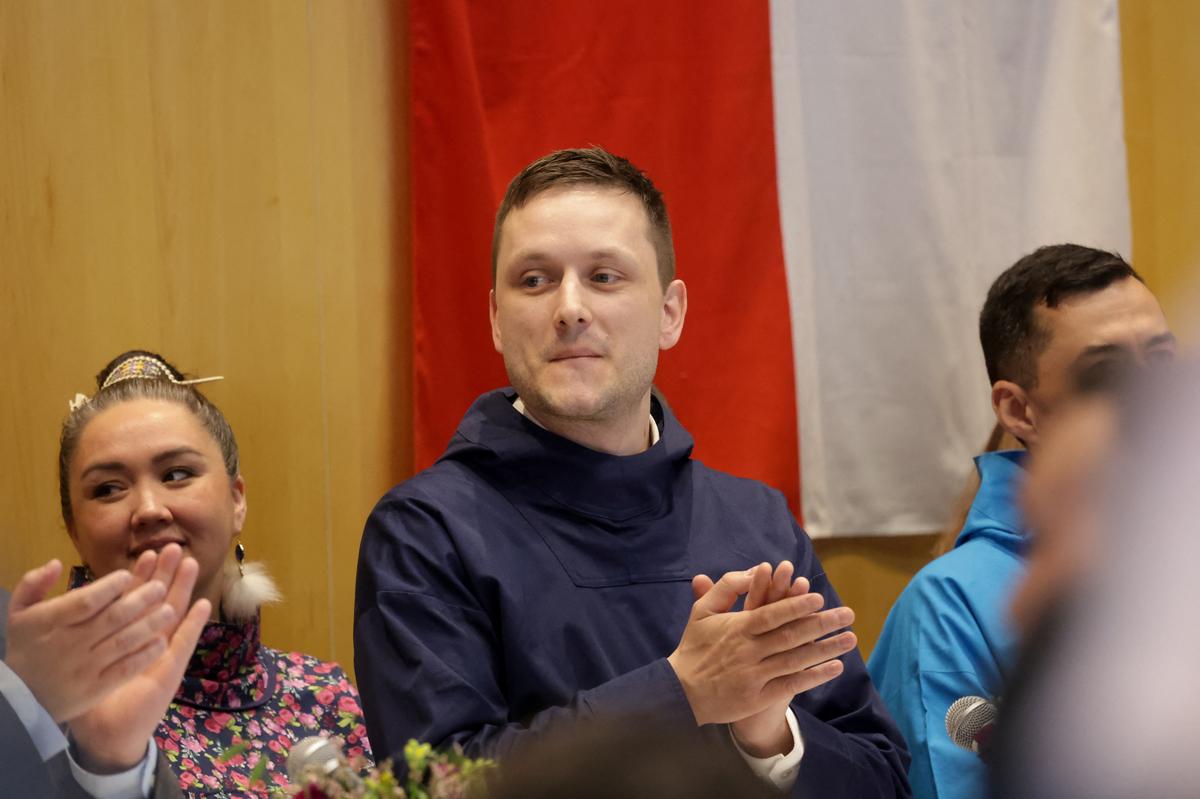
Greenland Prime Minister Jens-Frederik Nielsen has issued a fresh warning that the United States, under President Donald Trump, continues to harbour ambitions of controlling the strategically vital Arctic island, despite recent signals from Washington suggesting a softer approach.
Speaking in Greenland’s parliament in Nuuk on Monday, Nielsen said the fundamental American view on Greenland and its people has not changed. According to Reuters, the prime minister told lawmakers—through a translator—that Washington still sees Greenland as a territory that should be “tied to the US and governed from there.” He added that the United States continues to search for “paths to ownership and control over Greenland,” raising concerns about sovereignty and long-term geopolitical pressure.
Nielsen’s remarks come against the backdrop of renewed global competition in the Arctic, where melting ice has opened new shipping routes and access to untapped natural resources. The region has also become a focal point for strategic rivalry involving the United States, Russia, and China, significantly increasing Greenland’s importance in global security calculations.
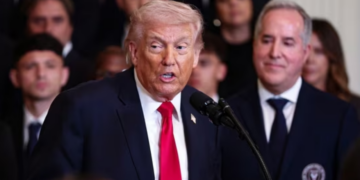
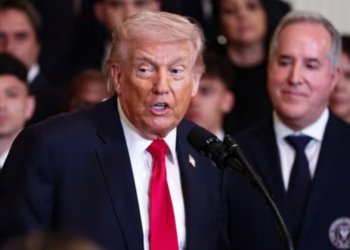
At the beginning of the year, President Trump reignited international controversy by openly calling for US control over Greenland, arguing that American ownership was necessary to protect national security interests in the Arctic. At the time, Washington did not rule out the use of military force, triggering alarm in Europe and reportedly causing strains within the NATO alliance. Denmark, which oversees Greenland’s foreign and defence policy, strongly rejected any suggestion that the island was for sale.
In recent weeks, however, Trump has attempted to dial down tensions. He has claimed that the United States secured “total access” to Greenland as part of a NATO-related arrangement, though he has not provided details on what that access entails or how it differs from existing agreements. His lack of clarity has continued to fuel speculation and unease among Greenlandic and European leaders.
Over the weekend, Trump said negotiations over a “very important” Greenland deal were underway and suggested that an agreement was close. Speaking to reporters aboard Air Force One, he described the talks as mutually beneficial and vital from a national security standpoint, but again stopped short of explaining the precise nature of the proposed deal or the level of consent from Greenlandic authorities.
Meanwhile, Denmark has sought to stabilise the situation diplomatically. Danish Foreign Minister Lars Løkke Rasmussen said initial talks between Denmark, Greenland, and the United States had “gone well,” with officials agreeing to set up a working group focused on Arctic security. However, he acknowledged that Trump’s earlier military rhetoric had caused a “huge derailment” before discussions were brought back on track.
For Greenland’s leadership, the issue remains existential. Nielsen’s warning underscores fears that behind softer language, Washington’s strategic objectives remain unchanged—keeping Greenland firmly within the American sphere of influence as global competition in the Arctic intensifies.




 English
 Gujarati
 Hindi
Hindi Kannada
 Malayalam
 Marathi
 Punjabi
 Tamil
Tamil Telugu