
 India
India

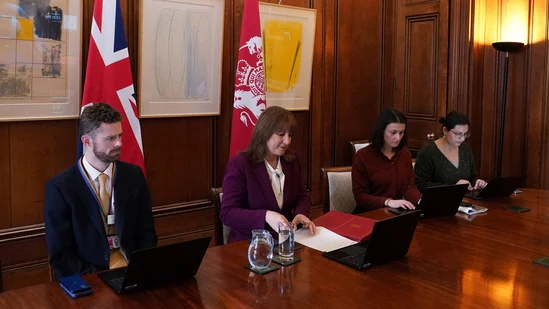
The finance ministers of the Group of Seven (G-7) convened virtually on Monday to assess the escalating conflict in the Middle East and its potential impact on regional stability, global energy markets, and international trade routes. While the group emphasized that it is not yet at the point of releasing strategic oil reserves, ministers said they stand ready to take necessary measures to support global energy supply if the situation worsens.
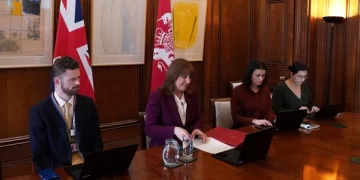
Britain’s Chancellor of the Exchequer, Rachel Reeves, participated in the virtual meeting alongside the finance ministers of France, Germany, Italy, Japan, Canada, and the United States. The discussion also included leaders from major international organizations such as the International Monetary Fund, World Bank Group, Organisation for Economic Co-operation and Development, and the International Energy Agency (IEA).
Roland Lescure, France’s finance minister, noted that the G-7 is closely monitoring developments in the energy markets and coordinating with international partners. “We are not at the point of organizing a release yet, but the situation is under careful observation in conjunction with the IEA,” Lescure said. He added that recent developments have prompted the G-7 to send “clear and firm messages” to reassure markets, emphasizing that there is currently no supply problem in the United States or Europe.
The ongoing conflict has already led major oil-producing countries, including Saudi Arabia, Kuwait, Iraq, and the United Arab Emirates, to lower their output. Additionally, the partial closure of the Strait of Hormuz, a critical passage for roughly 20 percent of the world’s oil and liquefied natural gas, has created significant market volatility. Brent crude oil futures initially surged by as much as 29 percent on Monday before retreating after news of the G-7 discussions.
Fatih Birol, head of the IEA, described the situation in Hormuz as posing “significant and growing” risks to the global oil market but highlighted that supplies remain sufficient for now. Coordinated releases of strategic oil reserves have historically occurred only five times, including responses to Russia’s invasion of Ukraine, the Gulf War, supply disruptions in Libya, and Hurricane Katrina.
Portugal’s finance minister, Joaquim Miranda Sarmento, cautioned that reserves should be preserved for genuine supply crises, emphasizing that current market challenges are primarily related to high oil prices rather than shortages. Global consumers are already experiencing the effects of market disruptions, with longer queues at fuel stations and rising jet fuel costs impacting air travel prices.
The G-7 statement concluded that ministers will continue monitoring the situation closely, coordinating as necessary, and remaining prepared to release stockpiles should the Middle East conflict escalate further.

 English
 Gujarati
 Hindi
Hindi Kannada
 Malayalam
 Marathi
 Punjabi
 Tamil
Tamil Telugu