 India
India

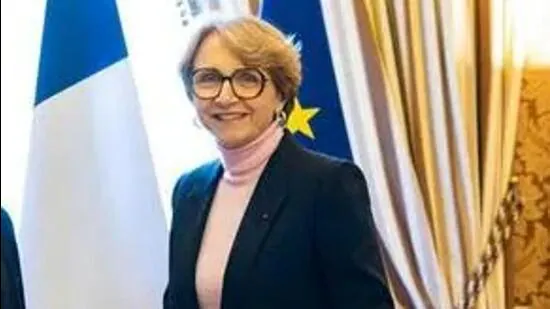
France has reiterated its commitment to strengthening ties with India, stressing that deeper bilateral and multilateral partnerships are crucial to bringing stability and predictability in a turbulent global order. Anne-Marie Descôtes, secretary general of France’s foreign ministry, underlined that the growing “instrumentalisation of tariffs” was becoming counterproductive and that Paris and New Delhi share a commitment to a rules-based international order.
During her visit to India last week for political consultations, Descôtes told Hindustan Times that advancing civil nuclear cooperation was a central focus. She pointed to the ambitious Jaitapur nuclear power plant project, describing it as a flagship initiative that could pave the way for an Indian supply chain capable of constructing and operating a European pressurised reactor (EPR). This, she noted, would significantly boost India’s energy independence while deepening long-term cooperation between the two nations.
Operational collaboration in the Indo-Pacific continues to expand, with France looking to build stronger trilateral partnerships involving India, Australia, and the UAE. Descôtes also expressed strong support for the swift conclusion of the long-awaited European Union-India free trade agreement. She emphasized that France’s chairmanship of the G7 and India’s presidency of Brics in 2026 present opportunities to jointly influence the global agenda.
Innovation has emerged as a new dimension in the Indo-French partnership. French President Emmanuel Macron’s upcoming visit to India in February for the AI Impact Summit will mark the launch of the India-France Year of Innovation. Both sides are preparing joint projects in fields like health, aerospace, and artificial intelligence to orient the strategic partnership toward future-oriented technologies.
Defence remains another pillar of cooperation. French defence companies are increasing their industrial footprint in India, with collaborations such as the HAL-SAFRAN partnership on helicopter engines. On counter-terrorism, Descôtes recalled France’s strong condemnation of the Pahalgam terror attack and reiterated Paris’s recognition of India’s right to defend itself. She confirmed that both countries recently held detailed discussions in Paris on threat assessments, capacity building, and multilateral cooperation in combating terrorism.
On broader geopolitical challenges, Descôtes said France’s recognition of a Palestinian state is intended to avert further escalation and revive dialogue for a two-state solution. She also highlighted President Macron’s recent discussions with Prime Minister Narendra Modi on India’s potential role in facilitating a ceasefire in Ukraine. France, she stressed, seeks a just and lasting peace while maintaining international pressure on Russia, which she accused of “choosing escalation rather than peace.”
With trade, nuclear energy, innovation, security, and diplomacy at the core, the Indo-French partnership is poised to expand into a model of strategic cooperation in an increasingly unpredictable world.


 English
 Gujarati
 Hindi
Hindi Kannada
 Malayalam
 Marathi
 Punjabi
 Tamil
Tamil Telugu