

 India
India

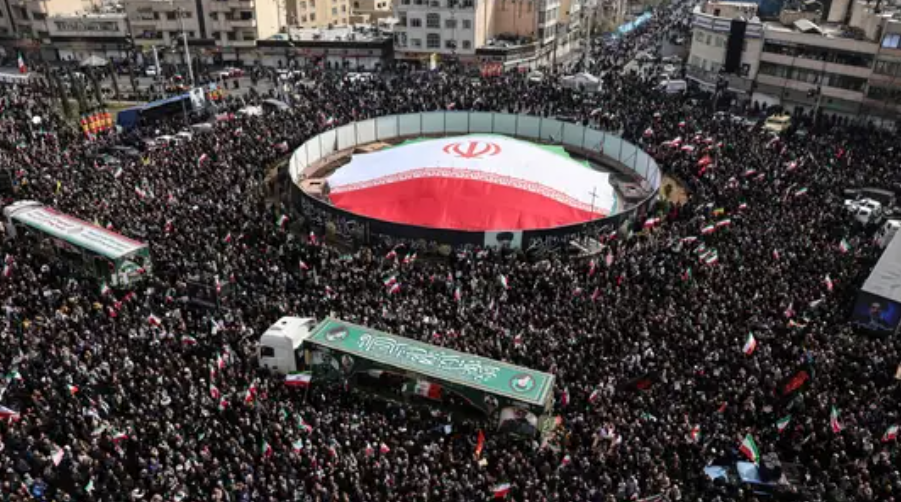
After nearly two weeks of escalating hostilities across West Asia, Iran has indicated it may be willing to bring the war with the United States and Israel to an end — but only under strict conditions. Iranian President Masoud Pezeshkian on Wednesday outlined three key demands that he said must be met before Tehran agrees to halt the conflict.
In a statement shared on social media, Pezeshkian said Iran would only consider ending the war if its “legitimate rights” are formally recognised, if reparations are paid for the damage caused by the attacks, and if the international community provides firm guarantees that such aggression will not happen again in the future.
The Iranian president made the remarks after holding discussions with leaders from Russia and Pakistan, during which he reiterated Tehran’s stated commitment to peace in the region. However, he blamed the current conflict squarely on what he called the “Zionist regime” and the United States.
“Talking to leaders of Russia and Pakistan, I reaffirmed Iran’s commitment to peace in the region,” Pezeshkian wrote on X. “The only way to end this war—ignited by the Zionist regime and the US—is recognising Iran’s legitimate rights, payment of reparations, and firm international guarantees against future aggression.”
Despite these remarks suggesting a possible diplomatic opening, the fighting has continued unabated across the region. Iranian strikes targeting shipping lanes and energy infrastructure have pushed global oil prices sharply higher, briefly touching nearly $100 a barrel on Thursday amid fears of prolonged disruption to energy supplies.
At the same time, the United States and Israel have maintained their military operations against Iranian targets. Israel’s military announced that it had launched what it described as a “wide-scale wave of strikes” inside Iran, signalling that there is currently little appetite for de-escalation from either side.
Tensions have also spread beyond Iran and Israel, raising concerns about a wider regional conflict. According to reports by the Associated Press, Iran has continued attacks despite United Nations Security Council resolutions discouraging strikes against neighbouring states. Fresh incidents were reported in Kuwait and the United Arab Emirates, further escalating fears among Gulf nations.

Missile alerts were also triggered in Israel, with residents in Jerusalem reporting sirens and loud explosions as Israeli air defence systems attempted to intercept incoming projectiles believed to have been launched from Iran.
Israel has also expanded its military operations to neighbouring Lebanon, saying it is targeting fighters from Hezbollah, the Iran-backed militant group that has long been engaged in conflict with Israel.
Meanwhile, US President Donald Trump appeared to dismiss the idea of an early end to the war. Speaking at an event in Kentucky, Trump suggested that Washington intends to continue the campaign until its objectives are achieved.
“We don’t want to leave early, do we? We’ve got to finish the job,” Trump said, signalling that the United States is unlikely to scale back its operations in the near term.
As the conflict approaches the two-week mark, diplomatic efforts remain limited and the risk of further escalation across West Asia continues to grow.



 English
 Gujarati
 Hindi
Hindi Kannada
 Malayalam
 Marathi
 Punjabi
 Tamil
Tamil Telugu