


 India
India

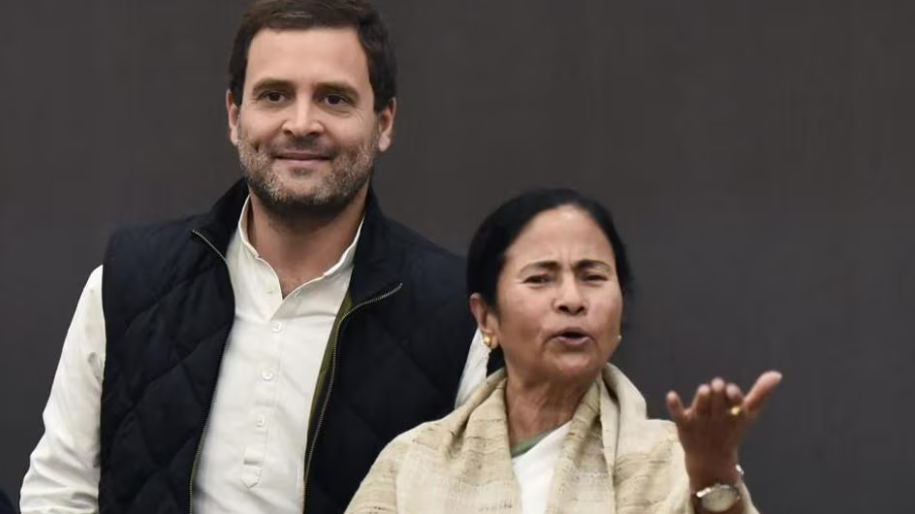
The Election Commission’s decision to freeze the Trinamool Congress’ traditional name and election symbol has triggered a fresh political realignment in West Bengal, bringing Congress leader Rahul Gandhi and Mamata Banerjee closer after months of political distance.
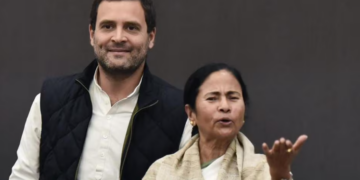
Gandhi, the Leader of Opposition in the Lok Sabha, spoke to former West Bengal chief minister Mamata Banerjee on Friday and conveyed his solidarity following the Election Commission’s interim decision concerning the rival factions of the Trinamool Congress. According to reports, Gandhi told Banerjee that the Congress was prepared to provide whatever assistance was required.
Banerjee subsequently said that the two parties were prepared to work together against the BJP-led central government.
“We are in this together. We want BJP to be removed,” Banerjee said while describing her conversation with Gandhi.
The outreach comes against the backdrop of another significant development in Bengal politics. Mamata Banerjee’s faction has decided not to contest the October 6 Nandigram bypoll and will instead support the Congress candidate. The move followed the withdrawal of her faction’s candidate, Sanchita Pradhan Dey.
The Election Commission’s interim order on Thursday barred both the Mamata Banerjee-led faction and the rebel group headed by Ritabrata Banerjee from using the original Trinamool Congress name and election symbol for the upcoming West Bengal bypolls.
The poll panel subsequently recognised the two groups separately. Ritabrata Banerjee’s faction was given the name “Democratic Trinamool Congress” and allotted the envelope symbol, while Mamata Banerjee’s group was recognised as “Mamata All India Trinamool Congress” and assigned the football player symbol.

Both factions have been recognised as political parties in West Bengal, Meghalaya and Tripura.
The Election Commission’s decision prompted a strong response from the Congress and several opposition parties. Gandhi accused the poll panel of facilitating the splitting of political parties, drawing parallels with the earlier disputes involving the Shiv Sena and Nationalist Congress Party in Maharashtra.
He alleged that the pattern involved parties being split and their election symbols subsequently being reassigned. Gandhi argued that the Election Commission’s constitutional responsibility was to safeguard the electoral mandate and free and fair elections.
The Congress’ Pawan Khera also criticised the BJP, alleging that the party was relying on institutional mechanisms rather than electoral popularity. The allegations were rejected by the BJP.
TMC MP Kalyan Banerjee questioned the legal basis of the Election Commission’s interim order. He argued that the rival faction had not established a prima facie case for claiming the All India Trinamool Congress name and symbol.
Kalyan also pointed to the rival group’s earlier identification as an AITC bloc before the Assembly Speaker, arguing that this contradicted its subsequent claim that the AITC had ceased to exist.
TMC leader Saket Gokhale separately accused Chief Election Commissioner Gyanesh Kumar of acting in coordination with the BJP. These allegations are political claims and were not established in the material cited.
The BJP responded sharply to Gandhi’s criticism. BJP national spokesperson Sudhanshu Trivedi argued that Gandhi’s comparison involving the Shiv Sena, NCP and TMC overlooked the history of the parties themselves.
Trivedi pointed out that the NCP emerged from a breakaway from the Congress in 1999, while Mamata Banerjee founded the Trinamool Congress after leaving the Congress in the 1990s. He further accused Gandhi of ignoring the Congress’ own history of internal splits.
The BJP spokesperson also defended his party against Gandhi’s allegations, claiming that the BJP had not experienced a comparable vertical organisational split since the Jana Sangh era.
The dispute comes after a dramatic change in West Bengal’s political landscape. The BJP won 207 of the 294 seats in the state Assembly elections, ending 15 years of Trinamool Congress rule.
Following the electoral defeat, a large majority of TMC legislators backed Ritabrata Banerjee, who was subsequently recognised by the Assembly Speaker as Leader of the Opposition. The Mamata-led faction also suffered losses in the Rajya Sabha, with several members resigning and later joining the BJP.
With the Election Commission now recognising two separate political formations and the traditional TMC symbol unavailable for the immediate bypolls, the dispute has moved beyond an internal party confrontation. It has become a larger political battle over party identity, electoral symbols and institutional authority ahead of the next round of contests in West Bengal.
The emerging Congress-TMC cooperation, particularly over the Nandigram bypoll, adds another layer to an already rapidly changing political landscape in the state.



 English
 Gujarati
 Hindi
Hindi Kannada
 Malayalam
 Marathi
 Punjabi
 Tamil
Tamil Telugu