
 India
India

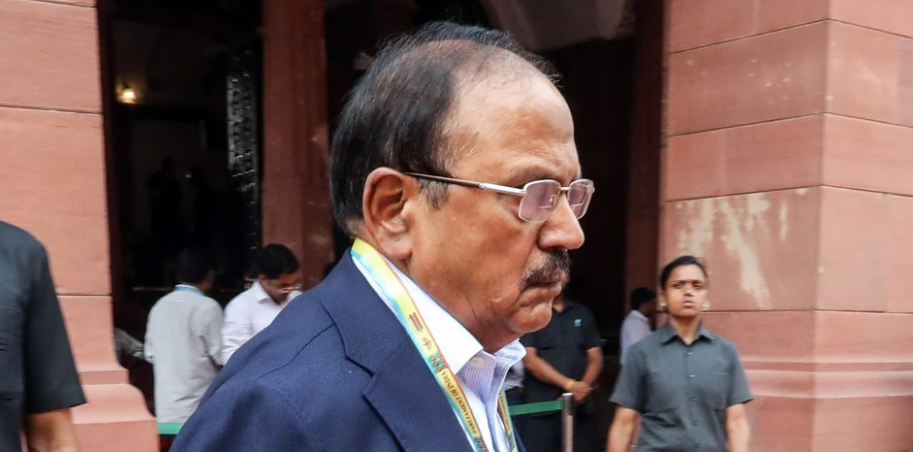
National Security Advisor Ajit Doval has delivered a strong message on India’s military capabilities, saying the country’s generosity and tolerance should never be mistaken for weakness. Recalling the decision-making behind Operation Sindoor, Doval said India was prepared to take risks and “hit hard” regardless of the consequences when confronted with a serious security threat.
Doval made the remarks in his first interview since Operation Sindoor, featured in Discovery’s upcoming two-part docuseries, Declassified: Operation Sindoor. The series brings together senior military and national security officials who were involved in the planning and execution of India’s response to the April 22 Pahalgam terror attack.
According to a PTI report, Doval said the central objective of the 88-hour military operation was clearly defined from the beginning: to destroy enemy camps, particularly those linked to the Pahalgam attack.
“We had decided the objective of the operation as destruction of the enemy camps particularly those who had been responsible for the Pahalgam attack,” Doval said.
‘India can hit hard’: Doval’s warning
In the documentary, Doval underlined what he described as a clear message from India’s military response. He said India’s willingness to exercise restraint or show tolerance should not be interpreted as an inability or unwillingness to respond forcefully.
“Message to the world is very clear – India’s generosity or India being tolerant should not be mistaken for its weakness. India can take risks, India can hit hard, irrespective of the consequences,” Doval said.
His remarks highlight the strategic thinking behind India’s response to terrorism and cross-border threats, while also signalling that New Delhi is prepared to accept risks associated with military action when national security is at stake.

What happened during Operation Sindoor?
Operation Sindoor was launched in the early hours of May 7, following the deadly Pahalgam terror attack on April 22, 2025, in which 26 people were killed. Indian armed forces carried out precision strikes against multiple terror infrastructure sites in Pakistan and Pakistan-occupied Kashmir (PoK).
The operation marked a significant escalation in India’s military response to a terror attack. Rather than limiting the response to conventional diplomatic or security measures, India targeted what it identified as terror infrastructure linked to the perpetrators.
Pakistan subsequently launched military offensives against India. Indian forces responded with a series of counter-offensive operations as hostilities intensified between the two nuclear-armed neighbours.
The military confrontation continued for nearly 88 hours before India and Pakistan reached an understanding on the evening of May 10, bringing the immediate hostilities to an end.
Doval recalls decision-making behind India’s response
The Discovery documentary is expected to provide first-hand accounts from senior officials involved in the operation, offering insight into the strategic calculations that shaped India’s response.
Doval’s appearance is particularly significant because it provides a rare account of the national security leadership’s thinking during the crisis. His comments indicate that the operation was guided by a specific objective rather than an open-ended military confrontation: targeting enemy camps and terror infrastructure associated with the Pahalgam attack.
The NSA’s remarks also reinforce a broader message about India’s approach to national security. While the country may exercise restraint in the face of provocations, Doval suggested that such restraint should not be interpreted as a lack of resolve.
With the release of Declassified: Operation Sindoor, the government’s top security and military leadership is set to offer a detailed account of the decisions surrounding one of the most consequential India-Pakistan military confrontations in recent years.


 English
 Gujarati
 Hindi
Hindi Kannada
 Malayalam
 Marathi
 Punjabi
 Tamil
Tamil Telugu