




 India
India

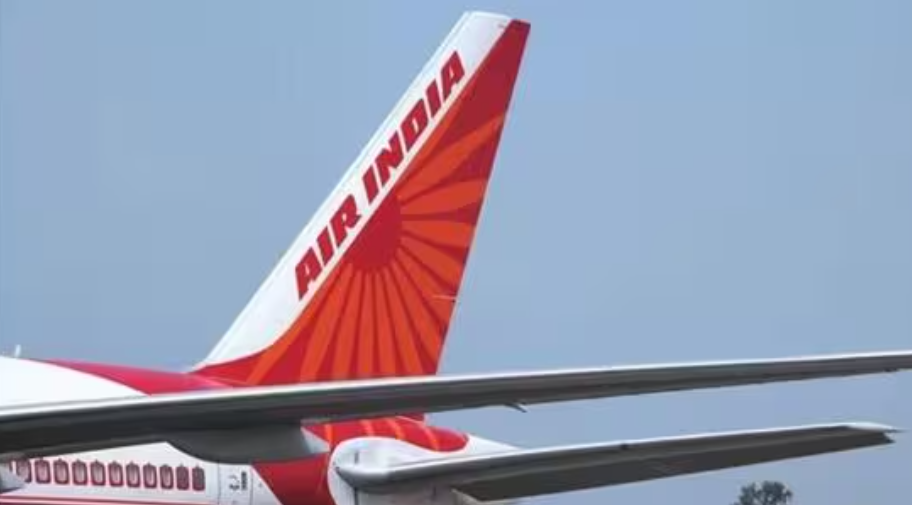
India’s flagship carrier Air India has decided to defer annual salary increments for employees by at least one quarter as it intensifies cost-control measures amid a turbulent global aviation environment. The announcement was made during an internal townhall meeting addressed by Air India Chief Executive Officer Campbell Wilson, Chief Human Resources Officer Ravindra Kumar GP, and Chief Finance Officer Sanjay Sharma on Friday.
The airline clarified that while annual salary hikes are being temporarily withheld, performance-linked variable pay for the previous year will still be disbursed. Senior management stressed that the move is precautionary and linked to broader financial uncertainty rather than a sign of impending layoffs.
Speaking to employees, Wilson said the airline had budgeted for salary increments but was forced to pause the decision due to worsening economic and operational conditions. He noted that Air India would reconsider the increments depending on how the business environment evolves later in the year.
The airline’s leadership cited several major challenges currently affecting operations and profitability. These include the continued closure of Pakistani airspace for Indian carriers, instability and conflict-driven airspace restrictions across West Asia, sharp depreciation of the Indian rupee, and a steep rise in aviation turbine fuel prices. According to Wilson, jet fuel costs have surged nearly threefold, placing immense pressure on airline finances.
Wilson admitted that Air India had failed to meet its financial targets for the previous fiscal year. While the airline was not aiming for profitability, it had projected a controlled level of losses. However, the carrier ended up posting losses higher than anticipated despite achieving significant operational goals.
The management urged employees across departments to adopt strict financial discipline. Staff were asked to minimise discretionary spending, renegotiate vendor contracts wherever possible, and postpone non-essential expenses. Wilson emphasised the need for what he described as a “laser sharp focus” on eliminating wastage and operational leakages.
Despite the financial stress, Air India maintained that there are no plans for retrenchments or workforce reductions. The airline said its long-term transformation strategy remains intact and includes expanding fleet size, increasing capacity, adopting more technology-driven systems, and replacing older aircraft with newer fuel-efficient planes.

Wilson also indicated that Air India may temporarily suspend or reduce frequencies on some international routes affected by airspace restrictions and rising operational costs. He said certain routes had become commercially unviable under the current conditions, forcing the airline to adapt its network strategy until geopolitical circumstances improve.
Air India had witnessed strong revenue growth and fleet expansion during fiscal 2025, but executives acknowledged that fiscal 2026 has begun under significantly more challenging market conditions, with slowing revenues and heightened global uncertainty impacting the aviation sector.




 English
 Gujarati
 Hindi
Hindi Kannada
 Malayalam
 Marathi
 Punjabi
 Tamil
Tamil Telugu